











CloverPit review

CloverPit Review: A Compact Roguelike Built on Tension and Risk
CloverPit Review: a tense little roguelike that keeps tugging your attention back
CloverPit is the kind of game that looks deceptively simple until you sink an hour into it and realize your brain is now fully in its grip. It blends slot-machine tension, roguelike decision-making, and a grimy arcade mood into something that feels both familiar and oddly fresh. As an experienced gamer, I’ve seen plenty of “one more run” designs, but CloverPit earns that hook through a sharp loop, strong pacing, and a style that makes every choice feel loaded.
The first thing that stands out is how quickly CloverPit establishes its identity. This is not a game trying to be broad and safe. It wants to trap you in a weird little room, make you stare at the odds, and force you to decide whether to play it smart or ride your luck into disaster. That tension is the whole appeal, and the game understands exactly how to milk it for drama.
Atmosphere, tone, and that uneasy charm
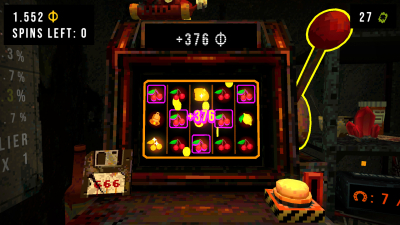
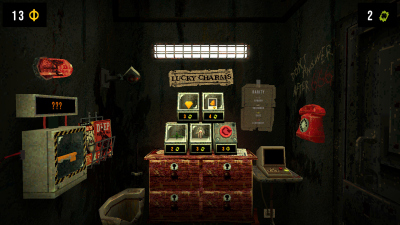
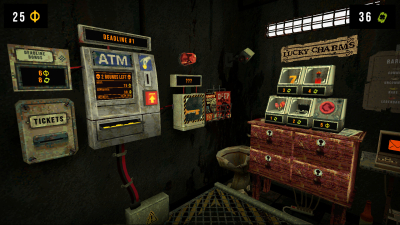
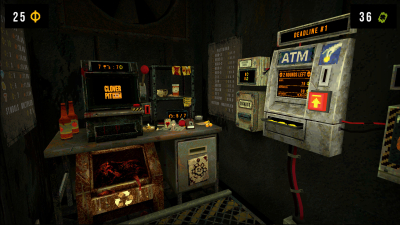
CloverPit has a grimy personality that does a lot of heavy lifting. The presentation is compact, but it never feels cheap. The visuals lean into a worn, clandestine look that matches the game’s theme perfectly. Every spin, every reward, every upgrade choice carries this sense that you are peeking into a dangerous system that wants to keep you invested.
Sound design does a lot of work here too. The ticks, clacks, and reward cues are tuned to create anticipation. When things go your way, the game gives you that satisfying surge that makes you want to keep going. When luck turns cold, the audio and pacing combine to make the pressure feel real. I’ve played bigger, prettier games that deliver less emotional punch.
The core loop: simple rules, difficult restraint
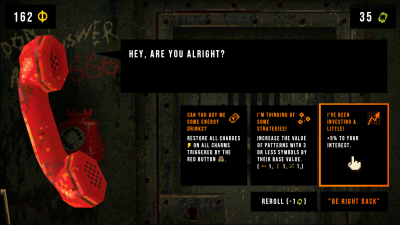
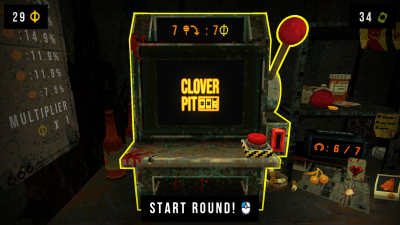
CloverPit lives and dies on its loop, and luckily that loop is strong. You are presented with a setup that is easy to understand, but the deeper you go, the more the game asks you to balance risk, timing, and resource management. There is always another decision in front of you: push forward, cash out, reroute your plan, or gamble on a stronger payoff that may never land.
That is where it gets compelling. The game does not rely on mindless repetition. It asks you to read the run, adapt to what appears, and accept that optimal play is often less about perfection and more about staying flexible. Good runs feel earned. Bad runs usually feel like you got a little too confident, which is exactly the sort of lesson a roguelike should be teaching.
There is a slot-machine flavor to the progression, but CloverPit is smarter than a pure luck simulator. The design gives you enough agency to feel responsible for your outcomes while still preserving the uncertainty that keeps every session lively. That balance is hard to get right. Here, it mostly lands.
How it plays moment to moment
Moment to moment, CloverPit is about tension management. You are constantly weighing immediate gains against future stability. The best sessions happen when you start recognizing patterns and learning when the game is nudging you toward danger. There is a pleasing rhythm to that process: investigate, commit, react, recover, repeat.
I also appreciate that it does not overcomplicate its rules just to look clever. A lot of modern roguelikes pile on systems until the core experience gets buried. CloverPit keeps its house of cards tidy. That restraint helps the stronger decisions stand out, and it makes each run easy to re-engage with after a break. If you want a game you can launch, understand quickly, and still master over time, this is a solid fit.
Progression that respects your time
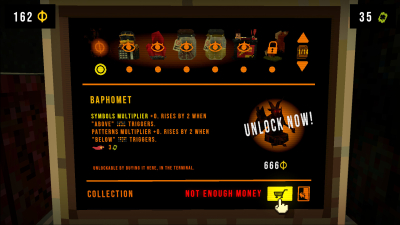
Progression in CloverPit is one of its best features because it gives each attempt a sense of momentum without drowning you in paperwork. You are not just chasing a single number; you are learning how the game’s economy behaves, how upgrades shift your odds, and when certain setups are worth pursuing. That makes repeated play feel worthwhile instead of repetitive.
The game also benefits from being the kind of experience that rewards short sessions just as much as long ones. You can play for a quick burst or settle in for a longer stretch, and the structure supports both. For players searching for something they can download, install, and enjoy without a long onboarding process, CloverPit makes a convincing case.
Difficulty, fairness, and the art of almost winning
CloverPit is not gentle, but it is usually fair. It may absolutely corner you, especially when your choices get sloppy, but that is part of the appeal. The game creates enough pressure that success feels significant, and failures usually leave you with a useful sense of what went wrong. That is a big win in my book.
What I admire most is that the game avoids the trap of making every near-miss feel identical. A lot of titles in this space can blur together after a while, but CloverPit keeps the emotional stakes clean. You know why a run collapsed. You know why a strategy paid off. That clarity turns the frustration into motivation instead of resentment.
Can you free yourself from the loop?
Maybe not, and that is kind of the point. CloverPit is built to pull you back in. The combination of fast restarts, compact design, and constant uncertainty makes it easy to say you are done and then immediately line up another attempt. If a game can create that compulsion without leaning on endless busywork, it deserves credit.
It is also the type of game people will naturally ask about in terms of cheats, mods, and unblocked access. The honest answer is that CloverPit works best as intended, without shortcuts. Mods may appear depending on community interest and platform support, but this is not the sort of game that needs them to be enjoyable. As for cheats, they would undercut the entire premise. The fun here is in the risk.
Who should play CloverPit?
If you like roguelikes, gambling-adjacent tension, or games that get maximum mileage out of a simple rule set, CloverPit is easy to recommend. If you prefer sprawling worlds, heavy narrative, or lots of character interaction, this probably will not be your main game. The experience is intentionally focused and repetitive in the best possible way.
It is especially appealing to players who enjoy analyzing systems and testing whether a risky line can be turned into a winning one. That kind of mindset will get a lot out of CloverPit. On the other hand, if you are looking for a purely relaxing play session, this is not that mood. The game thrives on pressure.
Final verdict
CloverPit is a tight, stylish, and surprisingly sticky roguelike that knows exactly what it wants to be. It is built around tension, reward, and the uneasy thrill of trusting your instincts when the odds are not in your favor. The presentation is strong, the loop is effective, and the pacing makes it easy to keep coming back for another run.
It is not trying to be everything. It does one thing very well: it makes every decision feel like it matters. For players who value focused design and a strong gameplay hook, CloverPit is well worth the download. It is the sort of game you install for a quick test and end up remembering the next time you are hunting for something sharp, replayable, and a little bit dangerous.
How to download CloverPit
Availability & Launch: CloverPit is typically accessed through its official store listing or publisher page when available. It is not usually a free game unless a special promotion or demo is offered.
Platforms: Check the official listing for supported platforms before you download. If CloverPit is not available on your device, there may be no native version, and cloud play or an emulator would only be relevant if the publisher supports that route. If a platform is not listed, assume it is unsupported until confirmed.
Install: Open the official store or launcher, search for CloverPit, buy or claim it if needed, then install and launch after the files finish downloading.
System Requirements: For PC, expect modest indie-level requirements, usually a modern processor, 8 GB RAM, and a recent graphics card. For Mac or Android, check the store page for the exact minimum specs before you install, since support can vary by build.
Cheats / Mods: Cheats are generally not part of the intended experience, and mods depend on whether the community and platform support them. If mods exist, they are usually unofficial and should be used carefully.
Unblocked Access: CloverPit is not guaranteed to be unblocked in school or work environments. Access depends on network rules and the platform you use, so do not assume it will run freely in restricted settings.