












Satisfactory review

Satisfactory Review: Building a Brilliant Factory From the Ground Up
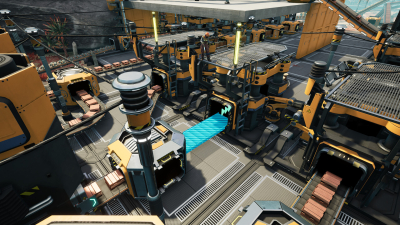
Satisfactory is one of those rare games that can swallow an entire weekend and leave you asking where the time went. I’ve played plenty of factory builders over the years, from compact automation puzzlers to sprawling industrial sandboxes, but this one stands out because it understands the pleasure of momentum. You start with a few machine parts and a patch of land, and before long you’re laying trains, balancing power grids, and planning conveyor lines with the kind of obsession usually reserved for city builders and grand strategy games. It is not just about optimization. It is about building something that feels alive, even when it is powered by screws, steel, and endless research trees.
What makes Satisfactory so gripping is that every small success opens the door to a bigger problem. You mine a little faster, then you need more power. You expand power, then you need better transport. You connect production lines, then you realize the layout is messy and decide to rebuild half the base. That loop is the heart of the game, and it is dangerously effective. If you like games that reward patience, planning, and a slightly unhealthy attention to logistics, this is an easy recommendation.
First impressions: a beautiful machine that never sits still
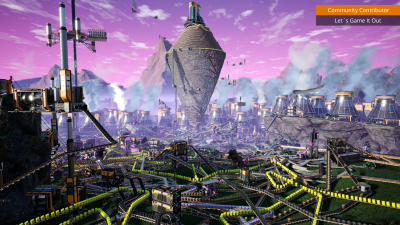
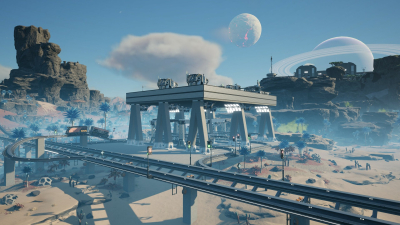
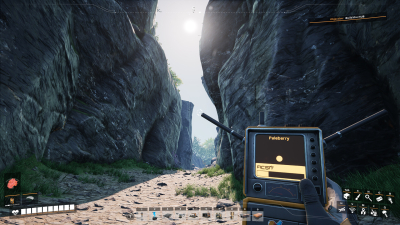
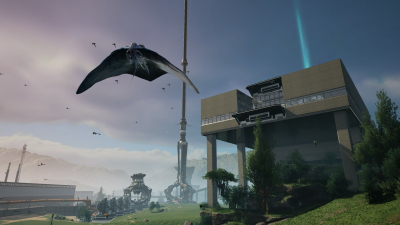
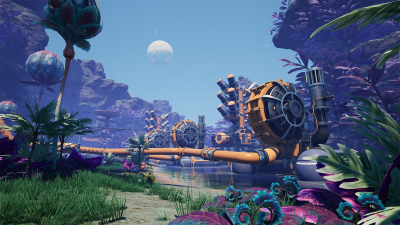
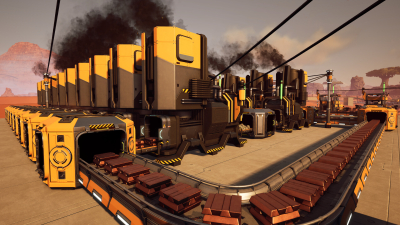
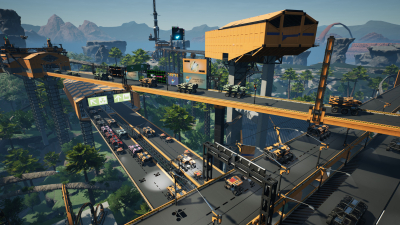
The first thing most players notice is the world. Satisfactory does not look like a sterile factory sim; it presents an alien landscape that is bright, stylish, and surprisingly inviting. The terrain is not just a backdrop. Hills, cliffs, caves, forests, and open plains all influence how you design your production network. You are not only placing machines, you are adapting to a living map that asks you to think vertically, horizontally, and sometimes creatively around a giant rock formation that refuses to cooperate.
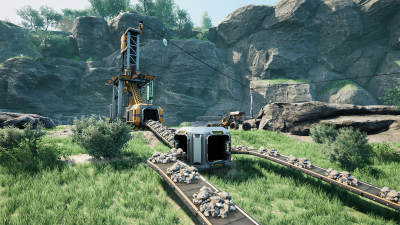
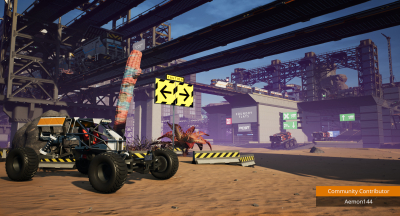
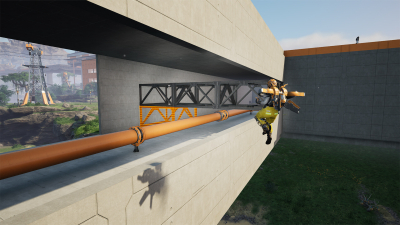
In practice, that means exploration matters early on. Finding new resources, scanning nodes, and unlocking travel options gives the game a sense of discovery that many automation titles lack. You are not locked into a single flat area, and that freedom makes the experience feel spacious. Even when your base becomes a noisy industrial maze, there is always another route, another node, or another biome to push into.
The loop: build, refine, expand, repeat
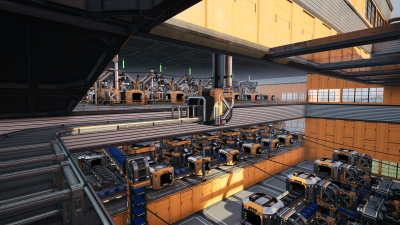
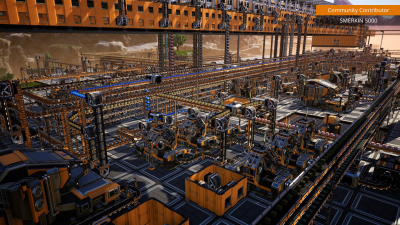
The core gameplay is easy to explain and hard to stop playing. You gather materials, automate production, research upgrades, and expand your infrastructure. But the magic is in how well all of those systems fit together. The game constantly tempts you to optimize. A line that was efficient an hour ago suddenly feels clumsy, and then you are back at the drawing board, rearranging lifts, reworking min/max ratios, and making room for another row of constructors.
There is a real satisfaction in seeing raw ore enter one end of a setup and emerge as something useful on the other. That progression never gets old because it is always tied to visible growth. You are not simply leveling up a menu. You are physically improving the world. When a production chain finally stabilizes, the result is both practical and emotional: you built that, and it works.
The pacing is also stronger than many games in the genre. Satisfactory gives you enough early progress to feel productive, but it never lets you settle too long. New tiers arrive with fresh machines and resource demands, and that keeps the game from becoming stagnant. It respects your intelligence, but it also knows that good automation games thrive on the next problem, not the last solution.
Why the game stays engaging for so long
A big part of the appeal is that Satisfactory is a “one more project” game. You set out to install one new production chain, and then that chain requires reinforced plates, which means you need a new iron route, which means you should really rebuild the smelter area, and suddenly it is two hours later. This sounds overwhelming on paper, but the game’s design makes complexity feel approachable. It introduces systems gradually and gives you enough control to tackle them in stages.
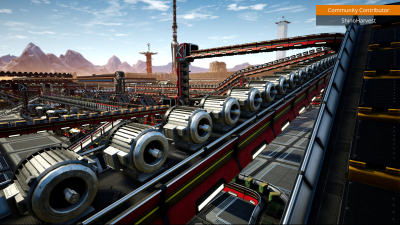
There is also a surprisingly strong sense of ownership. Two players can download the same game and build wildly different factories depending on their priorities. One person might favor clean symmetry and labeled zones, while another creates a more organic sprawl with transport lines crossing at odd angles. Both approaches can work. That openness is a major strength, because it makes each save feel personal instead of prescriptive.
The co-op side deserves a mention too. Playing with others can turn a private engineering puzzle into a shared project where everyone naturally falls into a role. One person mines and expands, another handles lines and power, another scouts ahead for new resource pockets. Even if you mostly play solo, it is nice to know the game supports that style without feeling like an afterthought.
Performance, presentation, and the practical side
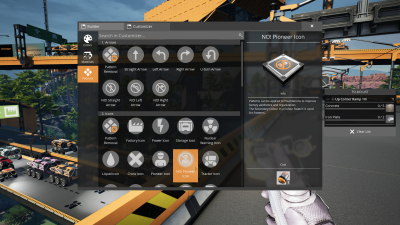
From a presentation standpoint, Satisfactory lands between functional and scenic. The UI is clean enough to avoid constant friction, and the whole game has the confidence of a project built by people who understand what factory fans actually care about. Yes, there is a lot of information on screen, but it is compartmentalized in a way that makes sense after a short learning period. You do not need to wrestle with the interface just to keep your operation running.
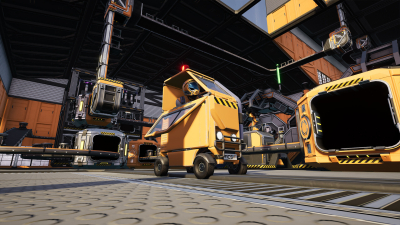
Performance is generally solid, though as with any factory game, the size of your base can eventually test your hardware. That is part of the genre’s reality. Once your world is full of belts, drones, pipes, and active production lines, you are asking a lot from the engine. Even so, the game handles ambition better than many rivals. The fact that it can support such massive builds while still looking attractive is a real achievement.
One thing worth noting is that Satisfactory rewards players who like planning tools and external notes. You can absolutely play by instinct, but the deeper you go, the more helpful it is to sketch ideas, estimate throughput, and think ahead. That is not a flaw. It is part of the appeal. This is a game for people who enjoy making order out of complexity.
Mods, cheats, and the community around the game
If you like to customize your experience, mods add a lot of value here. Players have long gravitated toward quality-of-life tweaks, building enhancements, and visual improvements, and the game’s community has produced a steady stream of creative additions. Some players prefer a pure run with no extras, while others lean heavily into mods to smooth out repetitive tasks. Either approach can make sense depending on how you want to play.
As for cheats, the game is not centered around them, but some players experiment with console tools, save editing, or community utilities when testing layouts or speeding through the early hours. That said, Satisfactory is strongest when you earn progression organically. The joy comes from setting up a system and watching it work, not from bypassing the challenge entirely.
If you are hoping for an unblocked version in a restricted environment, that is a different matter. The game is a large PC release, not something that typically runs freely in school or work settings. Access depends on the platform and network rules, and in most cases you would need permission plus a capable device. It is not the kind of game that conveniently slips through restrictions.
Who should play Satisfactory?
This is a game for builders, planners, problem-solvers, and anyone who gets genuine satisfaction from turning scattered resources into elegant systems. If you enjoy the feeling of improving a design, then revisiting it, then improving it again, Satisfactory will probably become a habit. It is not a casual five-minute distraction. It is a deep, absorbing loop that asks for attention and returns the favor with one of the most rewarding progression curves in modern automation games.
If you are expecting action first and logistics second, this may not be your ideal fit. The game is calm, deliberate, and often meditative. But if your idea of fun is looking at a perfectly timed production chain and thinking, yes, that works beautifully, then you are in the right place.
Final verdict
Satisfactory is an outstanding factory-building experience that combines exploration, planning, and long-form progression with remarkable confidence. It knows exactly what kind of player it wants: someone who enjoys construction as a process, not just a result. The game’s world is inviting, its systems are deep, and its ability to turn small wins into major ambitions is second to none. Whether you want to play solo, share a base with friends, or spend hours refining every detail, it offers the kind of scale that can keep you engaged for a very long time.
For experienced genre fans, this is an easy recommendation. For newcomers, it is one of the best places to start if you want to understand why automation games inspire such devotion. If you plan to download a large-scale builder and you like the idea of growing a factory from nothing, Satisfactory deserves a place near the top of your list.
How to download Satisfactory
Availability & Launch: Satisfactory is available as a paid PC game and can be purchased and downloaded through major digital stores. It is not free in normal storefronts.
Platforms: The game is available on PC. It is not natively available on Mac, Android, or consoles in the same way, so those users would need a compatible Windows setup; cloud or emulator solutions are not the standard route.
Install: Buy the game, download it from your chosen store, then run the installer or launcher and follow the on-screen steps to install and play.
System Requirements: Minimum PC specs are modest by modern standards, but a 64-bit Windows system, a decent CPU, 8 GB RAM or more, and a dedicated graphics card are recommended for smooth performance. Mac and Android are not officially supported for a direct install.
Cheats / Mods: Cheats are not a core feature, but mods are widely used and supported by the community through third-party tools and mod loaders.
Unblocked Access: Satisfactory is generally not suitable for unblocked play in school or work environments, since it requires a full game download and normal network/device access.