












Project Zomboid review

Project Zomboid Review: Mastering Survival in a World That Never Forgives
Project Zomboid review: the kind of apocalypse that learns your habits
I’ve spent enough years with survival games to know when one is pretending to be difficult and when one is actually asking you to think. Project Zomboid sits firmly in the second camp. It does not perform heroics. It does not hand out comfort. It drops you into a dead world, hands you a few scraps, and quietly waits to see how long you can keep your head together.
What makes Project Zomboid stand out is not just the zombie threat, though that is certainly present in every ruined house and broken window. It is the way the game turns routine into tension. Looking for a saucepan, checking a hallway, setting up curtains, carrying food back to a base, even deciding whether to read for an hour or go outside and risk the noise — everything matters. This is a game built on consequences, and it earns that reputation by making every small decision feel like a survival story.
A world that doesn’t forgive laziness
There is a special kind of pressure in Project Zomboid because the world does not revolve around you. That sounds obvious, but many games still secretly protect the player. Not this one. If you overcommit to a fight, you suffer. If you get careless while looting, you suffer. If you ignore boredom, hunger, exhaustion, weather, or contamination, the game reminds you that survival is a system, not a mood.
The best thing about this design is that it rarely feels unfair. It feels brutal, yes, but usually in a believable way. A bad plan gets punished because it was a bad plan. That kind of honesty is rare. When you finally understand the rhythm of the game, every successful day feels earned. When you do not, the town becomes your teacher, and it is not a gentle one.
Moment-to-moment play is all about discipline
Project Zomboid is not a game you rush through. You play it at a pace that invites caution, planning, and a healthy respect for silence. One minute you are checking cupboards for canned food, the next you are managing weight, fatigue, injuries, and the sound you just made while opening a door. The loop is simple on paper, but the execution is layered enough to keep veterans engaged for a long time.
The early game is especially strong. You start weak, vulnerable, and uncertain. That uncertainty creates some of the best tension in modern survival games. Finding a working bag can change your whole route. Discovering a generator can reshape your base plan. Spotting a secure house can feel like winning a small war. The game does not need cinematic drama; your own decisions supply enough.
Why the learning curve works
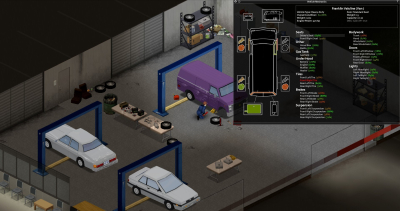
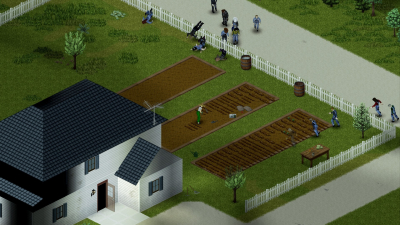
Some players bounce off Project Zomboid because it expects patience before confidence. That is understandable. It asks you to learn systems that other games would simplify away. Cooking, carpentry, medical care, mood management, crafting, farming, temperature, and vehicle upkeep all matter. Yet the complexity is not there to show off. It exists because the game wants your character to feel embedded in a genuine survival routine.
As an experienced gamer, I appreciate that structure. Too many survival titles confuse complexity with depth. Project Zomboid actually has both. Once you understand the systems, the game opens up in a way that feels almost academic. You begin planning for seasons, supply chains, backup homes, transport routes, and emergency exits. That level of long-term thinking gives the game real staying power.
Visuals, sound, and the strange power of restraint
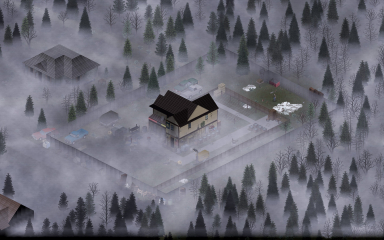
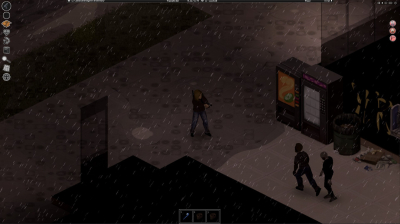
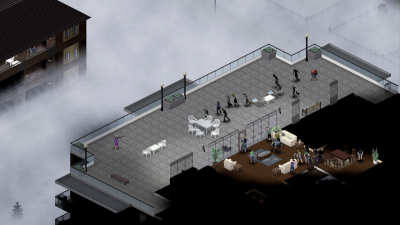
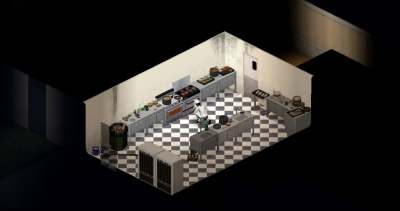
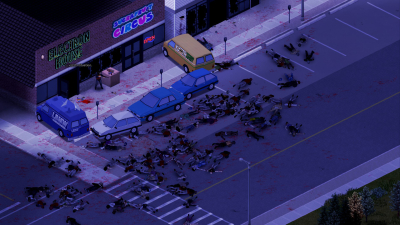
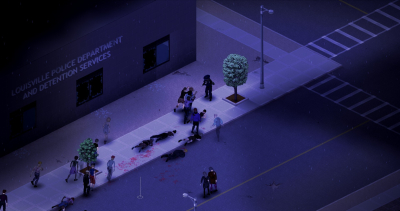
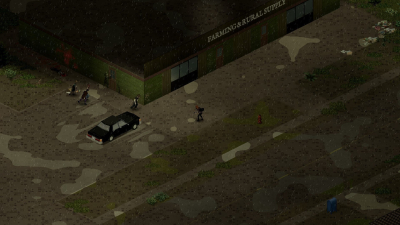
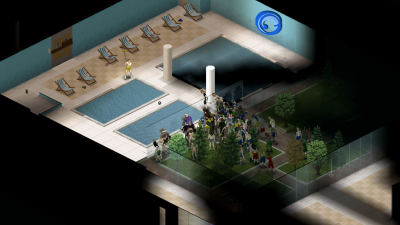
Project Zomboid will not win anyone over with flashy graphics, and that is part of its strength. The visual style is plain, functional, and readable. You always know what is happening, which matters more than visual spectacle in a game built on awareness and timing. The world looks worn out in a convincing way, and that makes each abandoned neighborhood more effective than it would be with higher-end visuals but less personality.
The sound design does a lot of heavy lifting. A loose window, a sudden thump, a dragged step from another room — these details matter because the game knows how to use silence. The absence of music for long stretches helps build dread. When the soundtrack does appear, it feels like a signal rather than an ornament. That restraint suits the game perfectly.
Single-player focus, co-op chaos, and community energy
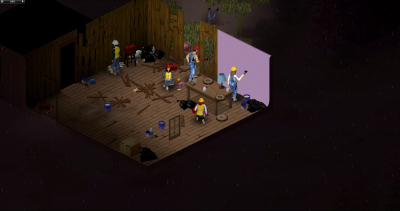
Project Zomboid works extremely well as a solo experience, but it also becomes wonderfully messy with friends. Cooperation in this game is rarely tidy. One player wants to fortify, another wants to scavenge, someone else is carrying too much weight, and suddenly the group is arguing over whether the nearby house is safe. Those moments are part of the charm. The game turns ordinary planning into social tension, which is often more entertaining than the undead themselves.
The community side matters too. Because the game supports mods so effectively, the experience can be tailored in a huge number of ways. Some players chase realism, some prefer quality-of-life adjustments, and others use mods to reshape the whole game. That flexibility gives Project Zomboid a long tail that many survival games never achieve. If a game is still inspiring experiments years after release, that tells you something important.
Mods, cheats, and the value of customization
Let’s be practical: yes, mods are one of Project Zomboid’s biggest strengths. They can improve interface clarity, expand content, rebalance systems, or create entirely new scenarios. For many players, mods are part of the real game rather than an optional extra. If you enjoy tinkering, this is one of the best platforms for it in the survival genre.
Cheats are a different matter. They exist in the broader sense through debug tools, configurations, and community-made aids, but the core appeal of Project Zomboid comes from playing it straight. You can experiment if you want to learn faster or test ideas, yet the game’s tension is built around vulnerability. The moment you remove all consequence, you lose the magic that makes the experience memorable.
Who should play it?
This is not a casual pick-up-and-play survival title. Project Zomboid is for players who enjoy systems, risk management, and the slow satisfaction of building safety from nothing. If you like games that reward knowledge, punish sloppiness, and turn mundane tasks into meaningful choices, you will likely have a great time here.
If you want instant gratification, constant combat, or a clear victory path, this probably will not be your favorite. But if you enjoy a game that tells its stories through supply shortages, broken windows, rain-soaked roads, and improvised routines, Project Zomboid is outstanding. It creates the rare feeling that your own habits are being tested by the world.
Final verdict
Project Zomboid is one of the strongest survival experiences available because it respects the genre’s core promise: survive by understanding the world, not by overpowering it. It is tough, demanding, and occasionally exhausting, but never shallow. Every session offers the possibility of disaster and the chance to turn disaster into a better plan next time.
For experienced players, that is the appeal. You don’t simply play Project Zomboid. You study it, adapt to it, and slowly earn the right to feel at home in a place that was never meant to be safe. That makes it one of the most absorbing survival games you can download, install, and keep returning to for years.
How to download Project Zomboid
Availability & Launch: Project Zomboid is a paid game on Steam and other legitimate store fronts where it can be downloaded and installed. It is not free in the standard edition, though discounts may appear during sales.
Platforms: The game is officially available on PC, including Windows, Mac, and Linux. It is not natively available on Android or consoles, and any mobile or console access would require unsupported workarounds rather than an official download. Cloud play is not the typical route for this title.
Install: Buy or access the game from the official store, download it through the launcher or client, then install and launch it from your library. Mods can usually be added later using the in-game workshop integration or manual setup.
System Requirements: On PC and Mac, you generally want a modern dual-core processor, 8 GB of RAM or more, and a dedicated or decent integrated graphics chip. Android is not officially supported, so there are no standard mobile requirements.
Cheats / Mods: Mods are widely supported and strongly encouraged by the community. Cheats are not the focus of normal play, but debug options and custom setups exist for experimentation.
Unblocked Access: It is not a good candidate for unblocked play in school or work environments, both because of platform restrictions and because it requires a proper install and access to game files.