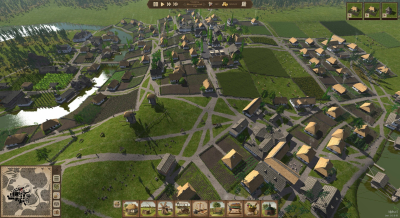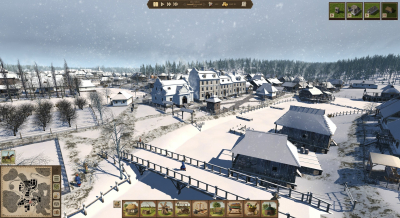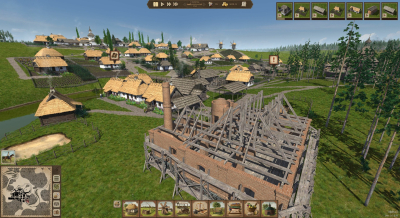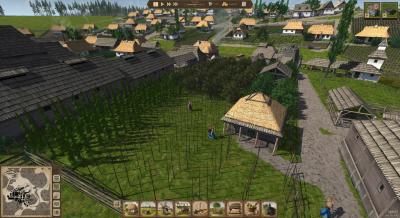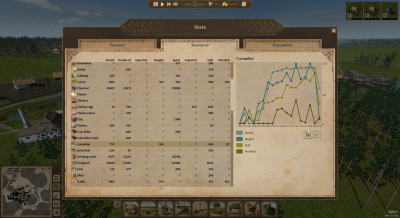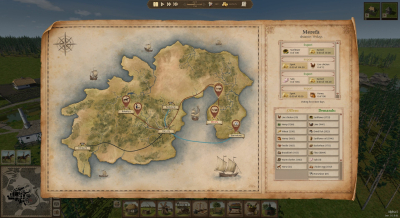













Ostriv review

Ostriv Review: A Calm, Deeply Rewarding City Builder for Strategic Planners
Ostriv Review: a city builder that respects your patience
Ostriv is the kind of city-building game that quietly asks for your full attention and then rewards it with a settlement that feels genuinely lived in. If you’ve spent years bouncing between flashy management sims and streamlined builders that hand you every answer, Ostriv lands differently. It is slower, more grounded, and a lot more interested in how a village grows than in how quickly it can be optimized. As an experienced gamer, I appreciate that restraint. It gives every road, barn, field, and workshop a sense of purpose.
This is not a game that rushes to impress you with spectacle. Instead, it leans into atmosphere and logistics. You place buildings, manage labor, balance food production, and react to the stubborn realities of weather, terrain, and seasonal change. The loop looks simple on paper, but the moment your workforce gets stretched thin or your storehouse fills in the wrong way, the whole village starts to feel like a real system instead of a set of menus.
A slower pace that actually matters
What stands out immediately is how Ostriv trusts the player. It does not overload you with constant pop-ups or turn every decision into a checklist. You can play at your own rhythm, pause to plan, then unpause and watch the town unfold. That calm pace makes the game far more absorbing than many louder rivals. When a new house goes up or a market path finally makes sense, the satisfaction is earned.
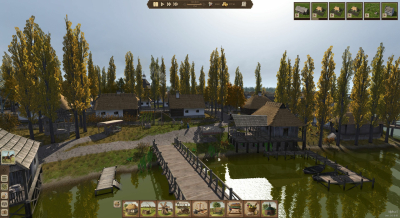
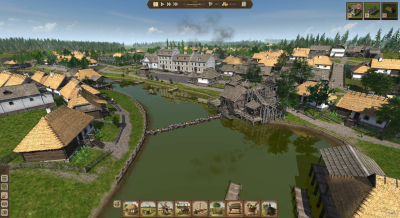
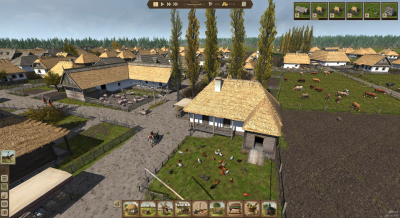
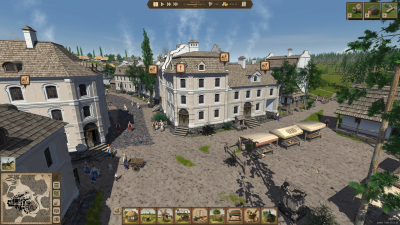
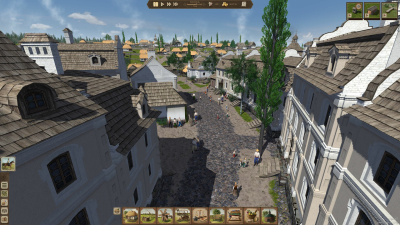
The game’s historical tone helps a lot. Ostriv is inspired by 18th-century settlement life, and that gives it a distinct identity. Buildings feel practical rather than decorative, and the town layout often ends up looking organic because the game encourages natural growth. You’re not just laying out grids for efficiency; you’re shaping a community around work, access, and survival.
Building a town one practical choice at a time
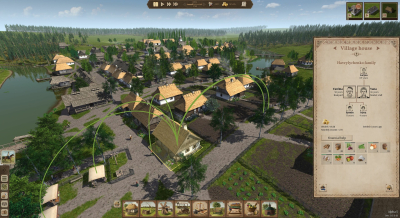
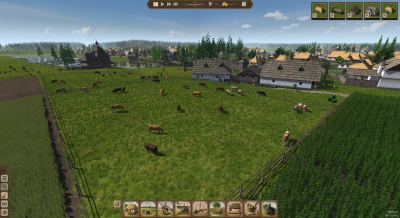
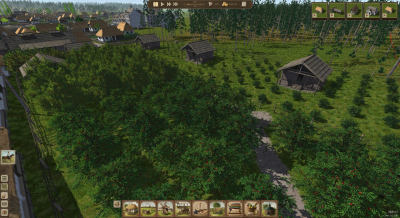
The core of Ostriv is construction and management, but the appeal lies in how connected everything is. A house means nothing without food nearby. A workshop without labor and materials slows down the entire economy. Fields need planning, storage, transport, and timing. If you’re used to city builders where you can brute-force expansion, Ostriv will politely humble you.
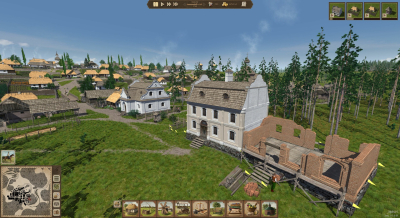
That struggle is part of the charm. You begin with small ambitions, and every successful expansion feels like a genuine milestone. Roads matter. Placement matters. The direction a village grows matters. Even the distance between a production building and the homes of its workers can become the difference between a smooth season and a bottleneck. The game’s systems reward observation over guesswork, which makes progression feel smart rather than scripted.
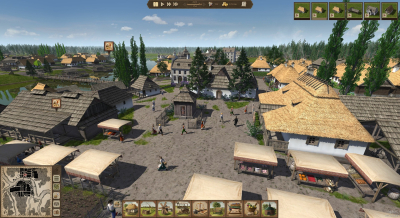
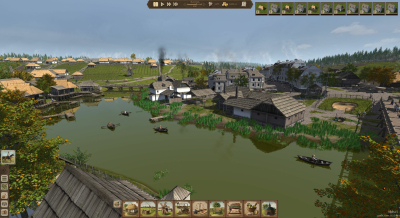
There’s also a nice tactile quality to the way the world develops. Watching carts move, workers carry materials, and farms cycle through the seasons gives the settlement a believable rhythm. Many management games tell you that your city is functioning. Ostriv lets you see it functioning.
Visuals and sound: modest but memorable
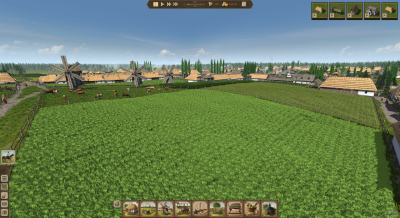
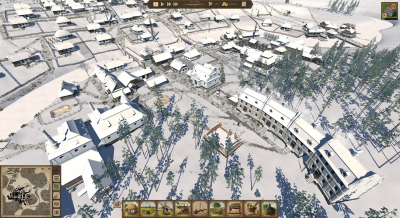
Ostriv does not chase ultra-detailed realism for its own sake, but it still looks beautiful in motion. The visual style is clean and grounded, with enough detail to make every structure readable and enough warmth to make the settlement feel human. Fields change with the seasons, sunlight shifts the mood, and the town gradually becomes something you recognize as yours.
The audio design deserves credit too. It is subtle, but it works. Ambient sounds, movement, and the general hush of rural life build a convincing mood without distracting from your planning. That matters more than it might seem. Games like this live or die on atmosphere, and Ostriv understands that a good management sim should feel like a place, not just a spreadsheet.
Challenge without chaos
One of the best aspects of Ostriv is that failure is usually understandable. When something goes wrong, you can trace the issue back to your decisions. Maybe you overbuilt. Maybe your grain storage was too far from the workers. Maybe you expanded before your food supply could support it. The game does a great job of making problems legible, which means success feels earned and mistakes feel educational rather than unfair.
That said, it is not a lightweight experience. If you want constant action, you may find the pace too restrained. If you want a game you can casually skim while watching something else, Ostriv will probably demand more focus than that. But for players who enjoy planning ahead and gently untangling economic pressure, it is deeply satisfying.
Where Ostriv shines most
Ostriv is at its best when your settlement reaches a point where the systems are interlocking smoothly and your attention shifts from survival to refinement. That’s when the game stops feeling like a series of tasks and starts feeling like stewardship. You are no longer only reacting; you are shaping the identity of the town.
The lack of artificial flash helps here. There is no excessive gamification in the way of your decisions. No gimmick-heavy distractions. Just a well-built simulation about making a rural community function. That purity might sound plain, but in practice it is refreshing. In a genre crowded with overdesigned interfaces and constant reward noise, Ostriv feels focused.
Who should download and play it?
If you enjoy city builders, historical strategy, or slow-burn management games, you should absolutely give Ostriv a look. It is especially appealing if you like design-heavy experiences where the fun comes from observing systems and improving them over time. It is less suited to players who want immediate spectacle, combat, or fast escalation.
For fans of games like settlement sims, colony organizers, and survival management without the combat pressure, Ostriv is a standout. It asks for patience, but it gives back a strong sense of ownership over the world you create. That kind of feeling is rare.
What about cheats, mods, and replay value?
As with many simulation games, the question of cheats and mods comes up quickly. Ostriv has a community interested in tweaking and extending the experience, and mods may be available depending on the current build and community support. Cheats are not the main attraction here, though. This is a game that is most rewarding when you engage with its economy honestly and let the systems breathe.
Replay value is good because the flow of a town rarely unfolds the same way twice. Different maps, priorities, and expansion choices can produce very different settlements. Even when you know the mechanics, better planning tends to reveal new layers rather than draining the experience.
Final verdict
Ostriv is a thoughtful, confident city builder that knows exactly what it wants to be. It is not trying to be the loudest game in the genre, and that discipline is one of its greatest strengths. The pacing is measured, the systems are interdependent, and the sense of place is impressive. If you want a management game that values realism, planning, and atmosphere, this is an easy recommendation.
It may not be the easiest game to recommend to every player, but for the right audience, it is excellent. If you’re the kind of gamer who likes to download a builder, install it, and spend hours refining a town until it feels right, Ostriv deserves a spot on your list. It is one of those rare games that makes routine work feel meaningful.
How to download Ostriv
Availability & Launch: Ostriv is available for PC through digital storefronts such as Steam. It is not free as a full release, though demos, trials, or occasional promotions may appear depending on the storefront.
Platforms: The game is currently available on PC. It is not officially released on Mac, Android, or consoles, so there is no native download for those platforms. If you want to play on unsupported devices, you would generally need remote play, cloud streaming support from your own PC setup, or an emulator only if a compatible version existed, which it does not in standard form.
Install: To install, open the storefront page, purchase or claim the game if offered, then download and follow the launcher prompts. After installation, launch the game from your library and adjust settings before starting a new save.
System Requirements: On PC, Ostriv is designed for modest hardware, but a reasonably modern processor, 8 GB RAM, and a dedicated or competent integrated GPU are a safe minimum. macOS and Android do not have native minimum requirements because the game is not officially supported there.
Cheats / Mods: Cheats are not a core feature, and mods may exist through community channels depending on the version. Always check current mod support before installing anything extra.
Unblocked Access: In restricted environments like school or work, Ostriv is not typically unblocked by default. Access depends on network rules, device permissions, and whether the game platform itself is allowed.