












Fast Food Simulator review

Fast Food Simulator Review: Turning Kitchen Chaos into Addictive Fun
Fast Food Simulator review
Fast Food Simulator is the kind of game that looks simple on the surface, then quietly eats your free time in the best possible way. I went in expecting a light management sandbox with a bit of kitchen chaos, and I came out with a strong appreciation for just how tense a lunch rush can feel when every order, ingredient, and cash register click matters. It is not a deep restaurant sim in the grand strategy sense, but it doesn’t need to be. What it does well is capture the pressure, rhythm, and absurd charm of working a fast-paced food counter while trying to keep customers happy and the business alive.
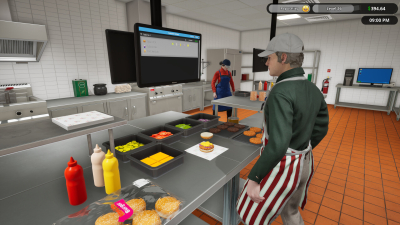
The first thing that stands out is how interactive everything feels. You are not just watching timers tick down while numbers rise in the background. You are moving around the kitchen, preparing food, serving guests, stocking supplies, cleaning messes, and trying to keep the whole operation from spiraling. That hands-on structure gives the game a satisfying cadence. When things are going well, you get into a flow state that feels almost musical. When things go wrong, the screen becomes a small disaster movie with fries burning, customers lining up, and your own sense of order slipping away fast.
Gameplay that thrives on pressure
What makes Fast Food Simulator click is its balance between routine and panic. There is always something to do, but the tasks are easy enough to learn quickly. You can pick up the basics, download the loop in your head, and start improving within a short session. The early game is about mastering timing and placement. Later on, the challenge shifts toward multitasking, planning, and making sure the kitchen does not collapse the moment a rush starts. It rewards players who enjoy reactive management and routine optimization more than those looking for elaborate systems or heavy role-playing.
There is a surprisingly strong sense of progression too. Even if the game does not overwhelm you with massive upgrade trees, small improvements matter. Faster prep, better layout decisions, and smoother stock handling all make a real difference. That makes each session feel like it has a purpose. You are not just surviving; you are building a better machine out of a place that initially feels barely held together.
Where the game shines
The best moments come when everything clicks. Orders are flowing, your station is organized, and you are moving with confidence. The game turns ordinary food service into an efficient little choreography, and that is more engaging than it sounds. There is also genuine satisfaction in transforming a messy start into a well-run setup. For a management game, that feeling of earned competence matters a lot.
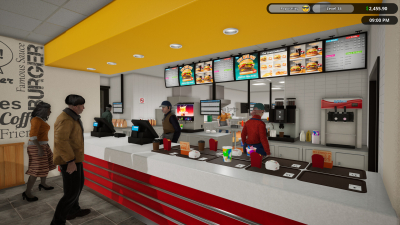
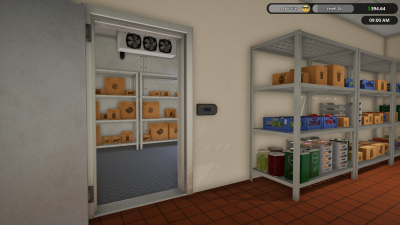
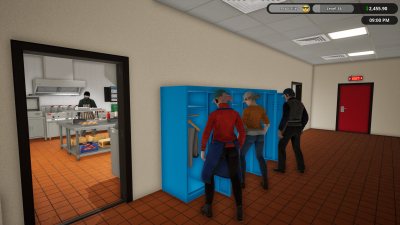
It helps that the presentation supports the action instead of distracting from it. The visuals are functional, clean, and readable, which is exactly what a game like this needs. You always know what is happening, where your next task is, and what is threatening to slow you down. Sound design also does a lot of heavy lifting, with enough audio feedback to make every success feel tangible. Small details like the clatter of work, the pace of customer traffic, and the constant background motion give the place a lived-in feel.
A simulator with a strong personality
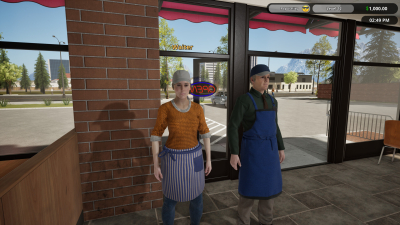
Fast Food Simulator has more character than many games in its lane. It avoids feeling sterile, which is a problem in plenty of similar management titles. Instead, it leans into the messy humor of the job. The result is a game that can be oddly relatable even if you have never worked in food service. Anyone who has ever dealt with too many tasks at once will understand the energy here immediately.
It also respects the player’s time. Sessions can be short, but they are rarely empty. You can play for a few minutes and still feel like you accomplished something, or you can settle in for a longer run and get fully absorbed. That flexibility makes it appealing across different moods. It is one of those games you can install, boot up, and immediately understand without a long onboarding process.
What holds it back
As much as I enjoyed it, Fast Food Simulator is not flawless. The core loop can become repetitive if you are expecting dramatic variety every hour. Once you understand the rhythm, the challenge mostly comes from speed and efficiency rather than from wildly different scenarios. That is not necessarily a weakness, but it does mean the game depends on you liking its central loop enough to repeat it.
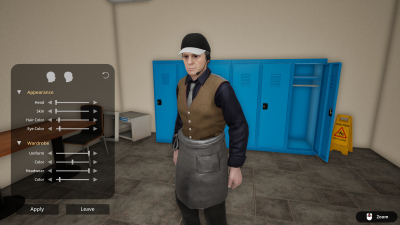
There are also moments where the simulation suggests depth without always delivering complex consequences. Some players may want more branching systems, more kitchen customization, or stronger business management layers. If that is your thing, you may find yourself wanting extras. Still, the game’s strengths are clear enough that these limits feel more like boundaries than problems.
Who should play it?
If you enjoy simulation games, time management challenges, or anything that slowly turns chaos into order, Fast Food Simulator is worth a serious look. It is especially appealing for players who like practical problem-solving over flashy spectacle. Fans of restaurant sims, tycoon-style pacing, or fast-response gameplay will likely get the most out of it.
On the other hand, if you want a sprawling business empire game with deep financial systems and endless customization, this may feel more focused than you want. It is built around moment-to-moment action, and that focus is part of its identity. Even so, the design is approachable enough that new players can jump in without much friction. It is easy to play, easy to understand, and easy to recommend to anyone curious about this style of game.
Mods, cheats, and replay value
When it comes to cheats and mods, the appeal here is a little different from a big open-ended sandbox. The game works best when you are engaging with its intended balance, since the tension is a major part of the experience. If mods are available, they may be useful for quality-of-life tweaks or cosmetic changes, but the game does not rely on them. Cheats, if supported by the community or external tools, would likely reduce the challenge more than enhance it, so I would treat them as optional extras rather than a core feature.
Replay value comes from mastery. You return to improve your layout, refine your timing, and handle pressure more cleanly than before. That can be enough for a game like this, especially if you enjoy trying different ways to keep the kitchen efficient. It is not an endless content machine, but it has enough internal momentum to keep players engaged longer than expected.
Final verdict
Fast Food Simulator succeeds because it knows exactly what it wants to be: a focused, lively, and immediately readable restaurant management game built around pressure and routine. It may not reinvent the genre, but it finds a polished, entertaining groove that is easy to respect. The best compliment I can give it is that it makes ordinary work feel like a compelling challenge. That is no small feat.
As an experienced gamer, I appreciate games that understand the difference between complexity and engagement. Fast Food Simulator leans into engagement. It is not trying to bury you in menus. It wants you in the kitchen, reacting, adapting, and learning the rhythm of the rush. For players who want a satisfying simulation that can be downloaded, installed, and enjoyed without a steep learning curve, this is a smart pick. If you like management games with a bit of personality and a lot of movement, you should absolutely give it a try.
How to download Fast Food Simulator
Availability & Launch: Fast Food Simulator can be accessed through its official storefront listing when available, and it may be offered as a paid title or in limited free trial form depending on the platform and launch window. Check the store page before you download to confirm current pricing and availability.
Platforms: The game is typically associated with PC release options, with support depending on the publisher’s current rollout. If it is not available on your preferred device, you may need to wait for an official release rather than rely on cloud streaming or an emulator. If console or mobile versions are announced later, they should be downloaded only from the proper storefront for that platform.
Install: To install, open the official store page, purchase or claim the game if it is free, click download, and follow the on-screen setup prompts. On PC, launch the installer if provided, then sign in and start playing once the files are verified.
System Requirements: For PC, expect modest minimum specs similar to many indie simulators: a recent dual-core CPU, 4 to 8 GB RAM, integrated or entry-level graphics, and enough storage for the game files. Mac and Android support, if offered, should be checked on the official page since requirements can vary by version.
Cheats / Mods: Cheats are not usually part of the standard experience, and mods depend on whether the developer supports them. If mods exist, they are best used for customization or convenience, not for bypassing the game’s core challenge.
Unblocked Access: Fast Food Simulator is not designed for guaranteed unblocked play in school or work environments. If access is restricted on a network, you should use approved channels and official downloads only.