












Factorio review

Factorio Review: Building an Industrial Masterpiece One Belt at a Time
Factorio is one of those games that quietly takes over your schedule, your habits, and eventually your idea of what a “quick session” means. I’ve spent enough time around automation games to know when one is just busywork and when one is a real system to learn. Factorio is the latter. It starts with a simple task: gather raw materials, build a few machines, and get something moving. Before long, you’re designing rail networks, balancing power demand, optimizing production chains, and defending a sprawling industrial site that feels more alive than some open worlds. It is demanding, brilliant, and easily one of the best examples of elegant game design I’ve played.
A factory game that respects your intelligence
What separates Factorio from many other management sims is how naturally it teaches itself. The game never needs to stop and lecture you for long. You place a furnace, then a belt, then a machine, and the logic clicks into place because every part of the system is visible. It is a game about understanding flow: ore becomes plates, plates become components, components become bigger systems. That loop sounds simple, but the depth expands fast. Every new technology creates a fresh set of decisions, and every decision has knock-on effects that can be felt across the entire map.
I like that Factorio never pretends to be casual. It can absolutely be approached with a relaxed mindset, but it will reward careful planning more than rushed improvisation. You can play by instinct for a while, yet eventually the game pushes you to think in layers. Power generation, resource extraction, logistics, defense, and research all need attention. The genius is that none of it feels disconnected. Everything feeds everything else.
The satisfaction of building something efficient
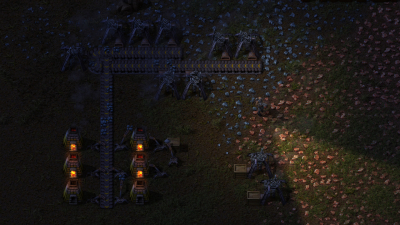
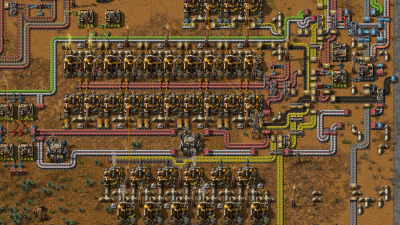
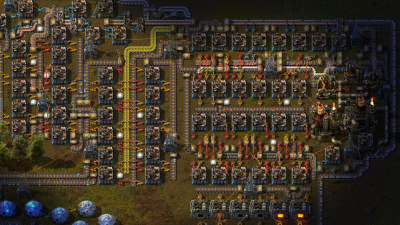
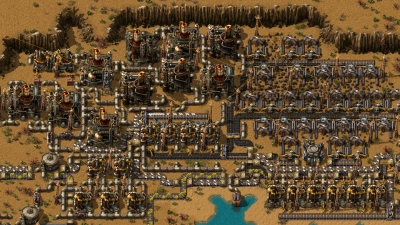
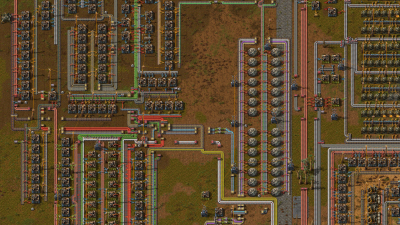
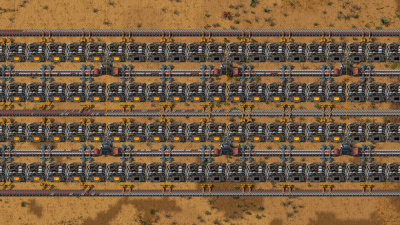
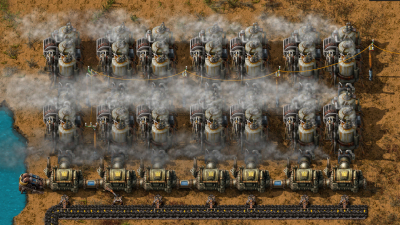
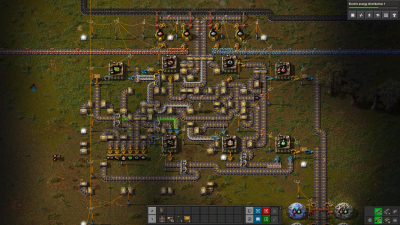
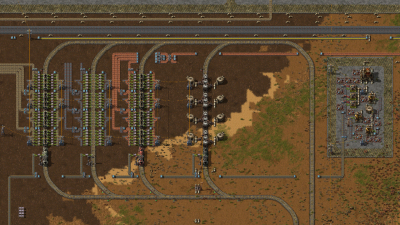
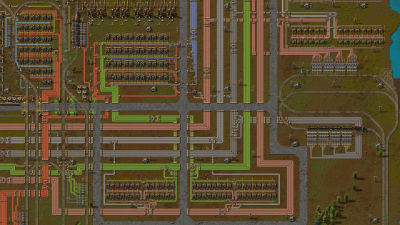
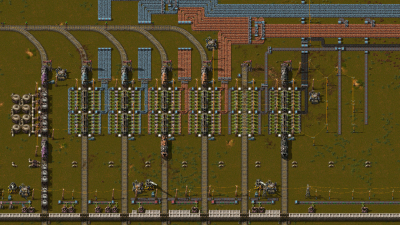
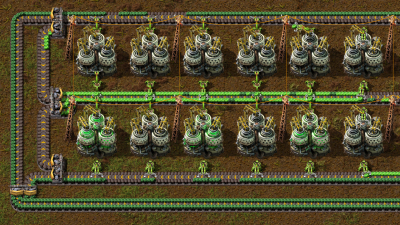
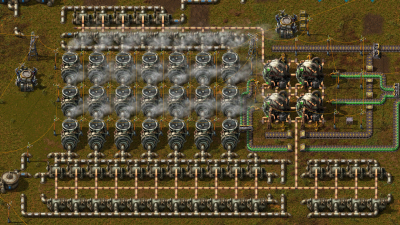
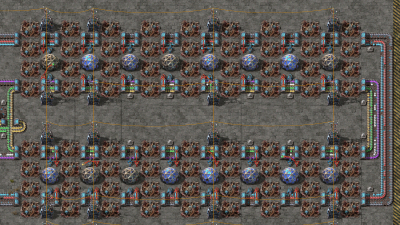
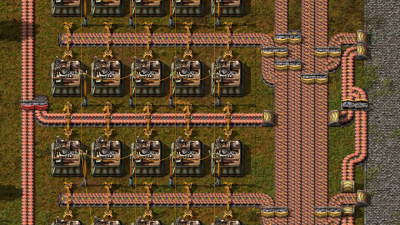
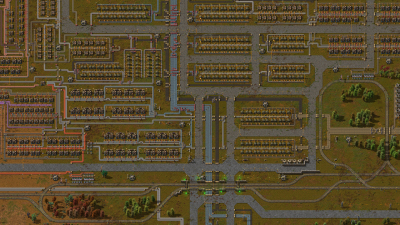
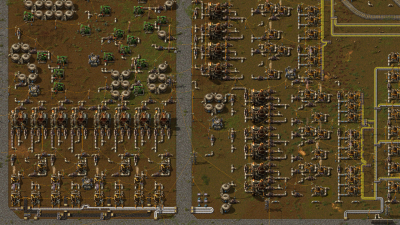
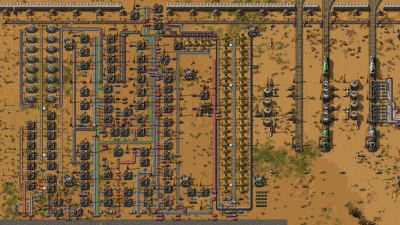
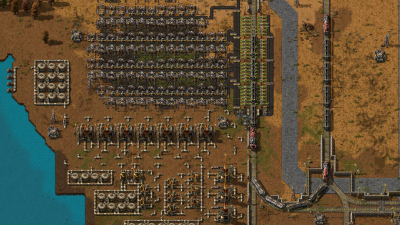
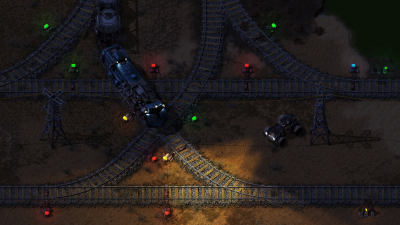
There are plenty of games that let you build large structures. Factorio is different because the pleasure comes from making those structures work well. Watching a long chain of machines run smoothly is weirdly rewarding. A belt that used to jam now flows with perfect rhythm. A train line that once caused chaos now delivers resources exactly when needed. A smelting block that started as a messy patch of furnaces becomes a clean, predictable engine of progress.
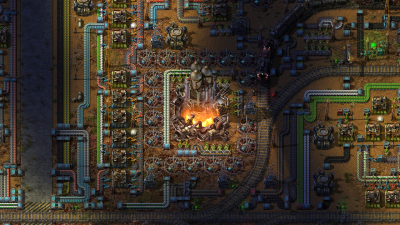
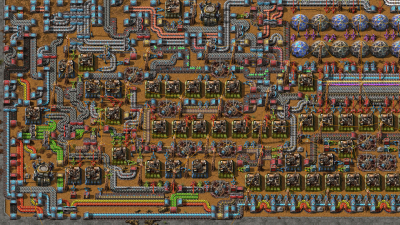
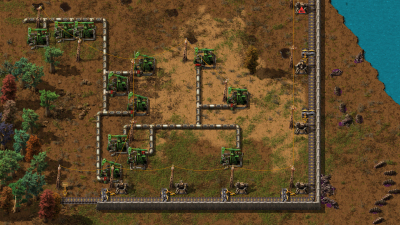
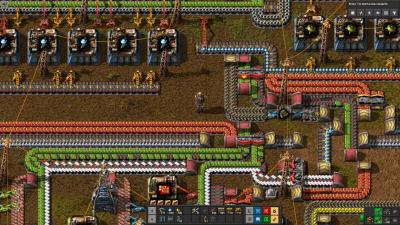
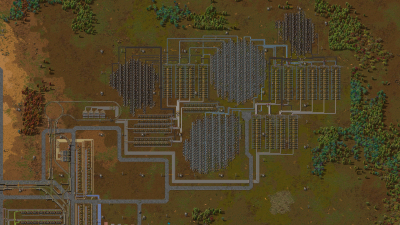
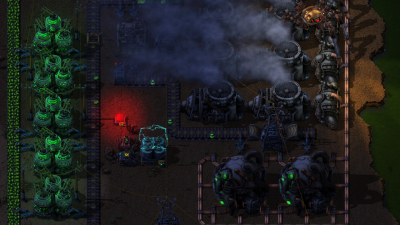
This is where the game earns its reputation. It is not about pretty construction for its own sake. It is about movement, throughput, and control. The visuals are practical rather than flashy, but that works in its favor. Every object communicates its purpose. You can glance at a factory and immediately see where the bottleneck lives. That clarity makes the work feel fair, even when the scale becomes enormous.
Challenge without cheap tricks
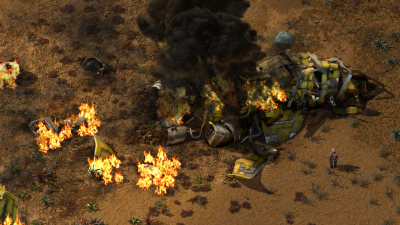
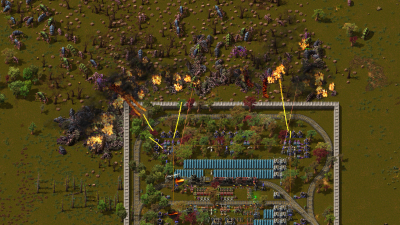
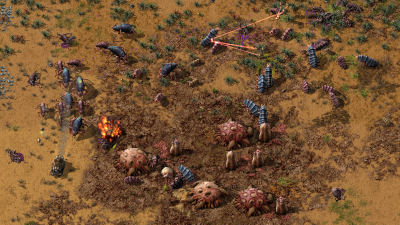
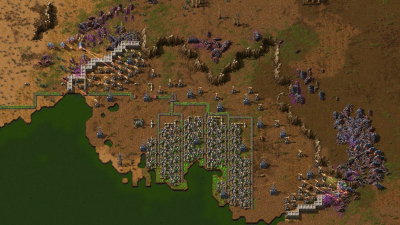
Factorio is at its best when it asks you to solve a problem instead of punishing you for not knowing the answer already. The world pushes back through pollution and hostile wildlife, which means your industrial expansion has consequences. Expand too aggressively and you may find your perimeter under pressure. Ignore defense and your production lines can be interrupted at the worst possible moment. That tension gives the game edge without turning it into a hassle.
What impressed me most is how consistent the challenge feels across a long campaign. You are rarely trapped by randomness. If something goes wrong, it usually happened because the factory was designed around a bad assumption or grown faster than the support systems could handle. That makes victory satisfying because it feels earned. The game is difficult, but it is rarely unfair.
Presentation that serves the machine
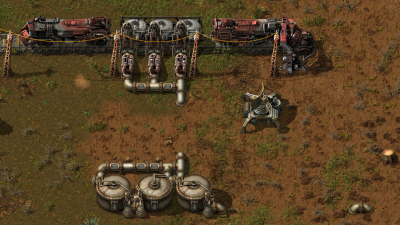
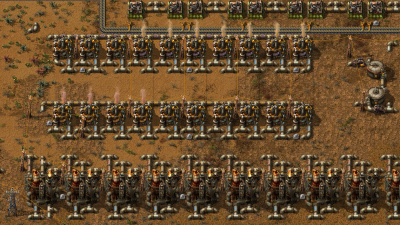
Factorio is not trying to impress you with cinematic spectacle. Its visual style is clean, readable, and efficient, which is exactly what this kind of game needs. The animations are simple but extremely clear. Belts move with obvious direction. Inserters swing with purpose. Pipes, power poles, assemblers, and trains all have a distinct language that becomes second nature after a short time. I’ve always appreciated games that value readability over clutter, and Factorio is a masterclass in that philosophy.
The sound design deserves credit too. Machines hum, clank, pulse, and whir in ways that help you understand the state of your production lines without opening menus. After a while, you begin to hear when something is off. A missing component, a starved belt, a power issue, or an overloaded system all create their own subtle audio cues. It is a small detail, but it adds to the sense that the factory is a living organism.
Solo focus or shared obsession
Factorio works very well as a solitary experience, but it also has a strong multiplayer side for players who want to construct a vast industrial operation with friends. That added layer of coordination can be excellent, especially if your group enjoys dividing responsibilities and solving logistical problems together. One player can handle mining and smelting while another pushes research or defense. It turns the whole thing into a shared engineering project, which is exactly the kind of cooperation the game encourages.
Even played alone, the game has a strangely social energy because of how often it inspires planning, comparison, and discussion. I’ve seen entire conversations emerge from a single production bottleneck. That kind of emergent planning is part of the magic.
Mods, cheats, and long-term replay value
Factorio has enormous replay value because the game naturally invites experimentation. You can build differently every run, set personal goals, or pursue extreme efficiency if that is your style. On top of that, mods are a major strength. The community has created everything from quality-of-life tools to huge expansions that alter how the game plays. If you enjoy extending a game’s lifespan, Factorio is one of the best platforms for that kind of tinkering.
As for cheats, the game is best enjoyed without them on a first playthrough, because learning the system is the heart of the experience. That said, if you are testing build ideas or experimenting in a sandbox setting, there are ways to adjust the rules for convenience. The important thing is that the core game does not rely on cheat-style shortcuts to stay interesting. Its depth is enough on its own.
Who should play it
If you like planning, optimization, logistics, or building systems that grow more complex over time, Factorio is an easy recommendation. It is not the kind of game you boot up just to pass ten minutes. It asks for attention, patience, and a willingness to learn by doing. In return, it offers one of the most satisfying gameplay loops available on PC. I would also recommend it to players who enjoy engineering problems, because Factorio turns those problems into entertainment with almost alarming confidence.
If you prefer action-heavy pacing or constant narrative direction, this may not be your ideal fit. The game’s rhythm is self-directed, and that is part of why it works so well. You set the goals, then the factory becomes the puzzle.
Final verdict
Factorio is a standout strategy and simulation game with remarkable depth, rare clarity, and a sense of purpose that never fades. It turns routine production into a satisfying art form. Every project creates a new lesson, every expansion raises the stakes, and every successful automation chain feels like a genuine achievement. I’ve played many games that promise endless creativity; Factorio actually delivers it through systems that are tight, readable, and deeply rewarding.
For players who enjoy thoughtful construction and long-term progression, this is an essential play. It is the kind of game you can install once and keep returning to for years, whether you want to refine your design, try mods, or start over with a cleaner blueprint. If you want a game that respects your brain and keeps asking more from it, Factorio is hard to top.
How to download Factorio
Availability & Launch: Factorio is available to purchase and download on official digital storefronts. It is not free, though a demo may exist depending on the current release page. The full game can be accessed directly after purchase.
Platforms: Factorio is available on PC through Windows, macOS, and Linux. It is not available natively on Android or iOS, and there is no official console release. If you want to play on unsupported devices, you would need a compatible PC setup rather than a cloud or emulator solution from the official side.
Install: Buy the game from the official store, download the installer or client version, then run the setup and launch it from your library. On Steam or similar platforms, install is handled through the client with a straightforward download process.
System Requirements: On PC and Mac, the game runs well on modest hardware; a modern dual-core CPU, 4 GB RAM, and a basic dedicated or integrated GPU are a reasonable minimum for the base experience. Android is not supported.
Cheats / Mods: Cheats are not the focus of the game, but sandbox-style experimentation is possible. Mods are widely supported and easy to add through the game’s mod browser or community sources.
Unblocked Access: It is generally not intended for unblocked play in school or work environments. Access depends on network rules and whether game downloads are allowed on that device or connection.