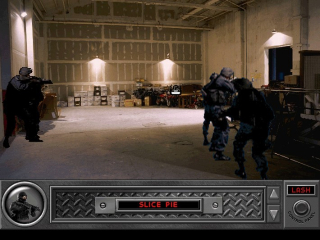













Police Quest: SWAT review

Police Quest: SWAT Review — A Methodical Tactical Classic That Demands Discipline
Police Quest: SWAT is one of those late-90s PC games that still feels oddly ambitious whenever I revisit it. It is not trying to be a power fantasy or a twitch shooter. Instead, it asks you to step into the world of law enforcement procedure, radio discipline, tactical planning, and split-second judgment. That alone already makes it stand apart from most games of its era. If you want a game where the action is layered on top of restraint, routine, and consequence, this is a surprisingly memorable experience to play.
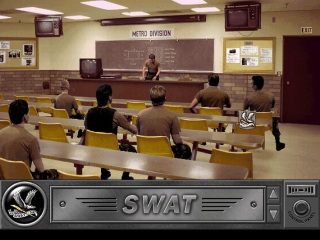
From the first briefing, it makes its intentions clear: this is about earning your way through scenarios by following protocol, listening closely, and reacting with care. A lot of older games age badly because their ideas were never strong enough to survive the passage of time. Police Quest: SWAT is different. Even now, there is a tension in how it plays that keeps you engaged, especially if you appreciate games that expect attention rather than reflexes alone.
A tactical game with a strong sense of identity
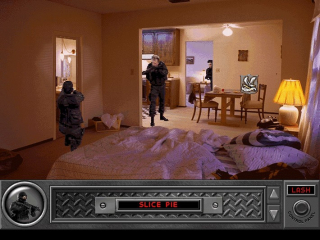
What stands out most is how serious the game wants to be. It does not lean into cartoonish violence or over-the-top spectacle. Instead, it presents tactical policing as a careful, methodical process. You are not just running around and trying to complete objectives as fast as possible. You are checking doors, evaluating threats, and learning when patience matters more than speed. That design choice gives the game a distinct personality that many modern action titles never really attempt.
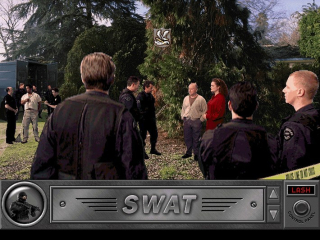
The structure is mission-based, but the feeling is more procedural than arcade-like. Every operation has a rhythm. You gather your team, receive instructions, and then try to apply what you have learned without making a mess of the situation. The best moments happen when everything clicks and you move through an area with confidence. The worst moments happen when you panic, rush, or misread a situation. That instability is part of the charm, and it keeps each mission from feeling interchangeable.
Why it still works
The game’s biggest strength is focus. It knows exactly what it wants to be, and that clarity helps it survive even when some of its mechanics feel dated. The interface is very much of its time, and there is a learning curve before you feel fully comfortable, but the reward is a sense of control that comes from understanding the system instead of overpowering it.
I also appreciate how much atmosphere is packed into relatively simple presentation. The briefing rooms, the radio chatter, the mission flow, and the pressure to behave correctly all combine into something that feels grounded. You can almost feel the sweat and stress of the job, and that is not something many games manage without relying on modern graphics or heavy scripted set pieces.
Gameplay that rewards patience over chaos
As someone who has played a lot of shooters, strategy games, and sim-like titles, I found Police Quest: SWAT refreshing because it refuses to hand you comfort on a silver platter. It expects you to think. It expects you to absorb procedure. It expects you to accept that not every encounter can be solved by brute force. That design might frustrate players who want immediate gratification, but for the right audience it is exactly what makes the game worth revisiting.
The challenge comes from timing, positioning, and communication. You have to stay aware of the environment and respect the game’s own rules. When you do that, the missions become tense in a good way. When you ignore procedure, the whole operation can unravel quickly. That is where the game’s identity really shines: it makes structure feel dramatic.
There is also a satisfying sense of progression in how you approach each operation. You start out cautious and uncertain, then gradually begin to read the game’s expectations more naturally. That slow improvement feels earned. It is not just about learning mechanics; it is about learning discipline.
Presentation, sound, and the mood of the era
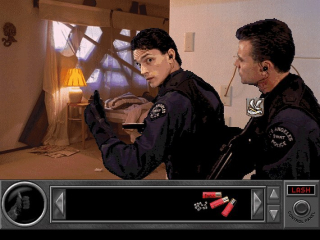
Visually, this is very much a product of its release period, so anyone looking to download it today should know that the presentation is functional rather than flashy. But the graphics do enough to support the tone. The environments are readable, the mission spaces are clear, and the overall look carries the right amount of grit. You are not here for visual excess. You are here for atmosphere and tension.
The sound design deserves credit too. The radio calls and briefings do a lot of heavy lifting. Even when the voice work or audio cues show their age, they contribute to the game’s seriousness. A modern player might laugh at some of the delivery or interface quirks, but there is real craft behind how the game uses sound to tighten the mood. It makes every decision feel like it matters, which is exactly what a game like this needs.
What I remember most is the feeling of being on the job. The game creates a believable routine, and that routine makes the dangerous moments more effective. It is easy to forget how rare that kind of design was back then.
Not for everyone, but worth playing if you like old-school systems
If you want instant action, this will probably feel stiff. If you want a forgiving experience, it will likely seem harsh. But if you enjoy older games that ask you to learn their language, Police Quest: SWAT has real value. It is one of those titles that becomes more interesting the longer you sit with it. The more you understand its rules, the more satisfying it becomes to install, practice, and eventually master the flow of a mission.
It also has historical interest. This is an important part of Sierra’s experimental side, where adventure-game DNA mixes with simulation-style discipline. That blend is fascinating because it shows a studio willing to take risks. You can see the edges where the design is still rough, but you can also see a clear vision. That combination is often more memorable than polished mediocrity.
For modern players exploring old PC libraries, this is a title worth considering alongside the classics of the era. It is not a convenience-first game, nor does it pretend to be. But it offers something specific and unusual that still stands out. If you are the sort of player who likes to dig into game design rather than just consume it, this one can absolutely hold your attention.
Replay value, cheats, and mods
Replay value in Police Quest: SWAT comes from drilling missions, improving your performance, and seeing how much better things go when you understand the system. It is not a giant open-ended sandbox, so there is a limit to repeated runs, but the tactical structure gives it enough room to revisit certain scenarios with a sharper mind.
As for cheats, players sometimes look for ways to get past difficult spots, especially when older games expect very specific actions. That said, using cheats can undercut the intended tension, and this game is best appreciated when played fairly. Mods are not a major part of the experience either. This is not one of those communities-driven titles with a huge mod scene. If you do find unofficial tweaks, they are usually more about compatibility than remaking the game.
That makes the original experience more important. The best way to enjoy it is to let the game be what it is instead of trying to modernize it into something else.
Final verdict
Police Quest: SWAT is a distinctive and often underappreciated tactical experience from an era when games were far more willing to make you work for their rewards. It is tense, methodical, and occasionally unforgiving, but that is exactly why it still has character. I would not recommend it to someone who wants quick thrills, and I would not pretend the controls or presentation feel modern. But I would absolutely recommend it to players who appreciate vintage design, strong atmosphere, and a game that respects procedure.
Even today, there is something compelling about how seriously it treats its subject matter. It may not be easy to jump into, but once you settle into its rhythm, it offers a kind of satisfaction that a lot of newer games overlook. For anyone looking to download a classic tactical title, this is one worth remembering.
How to download Police Quest: SWAT
Availability & Launch: Police Quest: SWAT is an older PC game, so the main way to get it is through authorized digital stores or classic-game collections when available. It is not typically free in official form, though availability can vary by storefront and region.
Platforms: The original release was for PC. It is not natively available on modern consoles or mobile devices. If you want to play it on current hardware, you may need DOSBox or a similar compatibility layer. Mac and Android versions are generally not official, so access on those platforms usually depends on emulation or cloud-style workarounds.
Install: After you download the game, follow the store or archive setup instructions, then configure the compatibility tool if needed. On modern PCs, that usually means pointing the launcher to the game files and adjusting sound or input settings before starting.
System Requirements: For PC, the game’s original requirements are extremely modest by modern standards. A basic Windows machine, a small amount of RAM, and a compatible emulator or legacy environment are usually enough. Mac and Android are not officially supported, so requirements there depend on the emulator or wrapper being used.
Cheats / Mods: Cheats may exist through old guides or fan tools, but they are not part of the official package. Mods are limited and mostly community-made compatibility fixes rather than major content expansions.
Unblocked Access: It is not designed for browser-based unblocked play, so school or work environments would usually need the proper software installed locally. In most cases, access depends on whether the device can run the game or its emulator at all.