








That Dragon, Cancer review

That Dragon, Cancer: A Heartbreaking Interactive Memoir That Redefines Emotional Storytelling
That Dragon, Cancer is not the kind of game you “clear” on a weekend and forget by Monday. It is the kind of experience that settles in quietly, then keeps resurfacing long after you have closed it. As an experienced gamer, I’ve played plenty of narrative-driven titles that aim for emotion, but this one stands apart because it is built from lived grief rather than designed tragedy. That difference changes everything. It is raw, fragile, often uncomfortable, and far more honest than most games that try to make you cry on command.
What struck me first was how deliberate the project feels in every interaction. This is not a traditional adventure stuffed with combat, puzzles, or progression systems. Instead, it gives you small, symbolic moments and asks you to sit inside them. You move through memory-like spaces, listen to fragments of conversation, and witness a family trying to hold on while their world narrows. The pacing is slow, sometimes almost painfully so, but that restraint is part of its power. It refuses to rush the hurt.
A personal story told with unusual restraint
Most games place you at the center of heroics. That Dragon, Cancer places you beside people who can do very little except endure. The emotional center is not a quest or a victory condition; it is a child’s illness and the way that illness reshapes every hour of a family’s life. The result is a review experience that feels closer to reading someone’s private letters than playing a mainstream release.
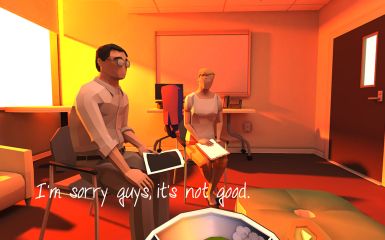
The writing is careful, but it never feels sanitized. The dialogue carries exhaustion, denial, hope, and spiritual questioning without forcing a clean answer. I appreciated that the game does not flatten its subjects into symbols. The parents are not presented as saints. They are tired, frightened, angry, faithful, and inconsistent, which makes them feel real. That honesty gives the game its weight.
From a gameplay standpoint, you should not come here expecting elaborate systems. The interactive moments are simple by design: moving through scenes, selecting small actions, listening, observing, and occasionally responding to visual or audio cues. In lesser hands this could have felt thin, but here the simplicity supports the theme. The game is asking you to participate in memory and grief, not master mechanics.
Visual design, sound, and atmosphere
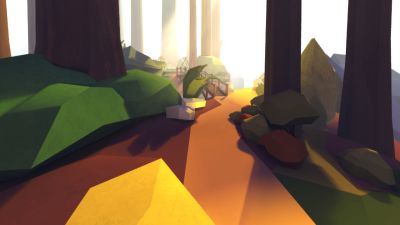
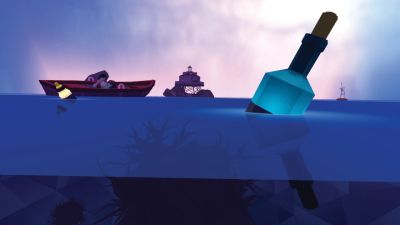
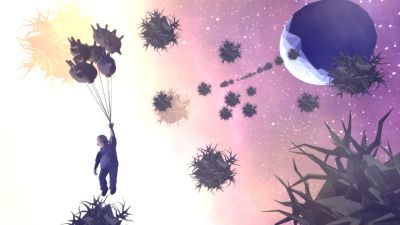
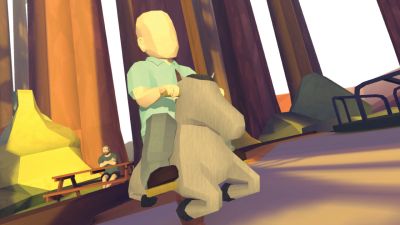
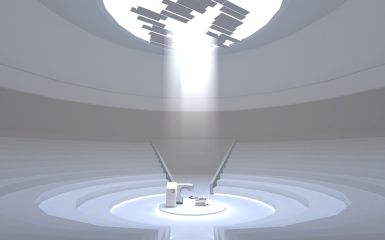
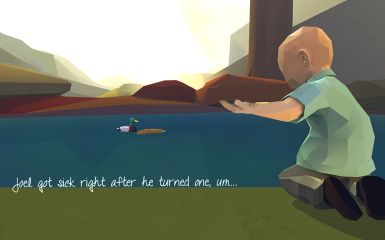
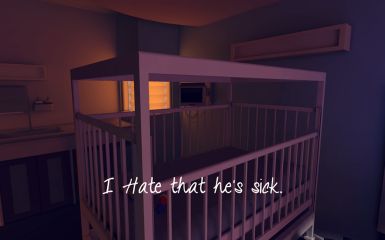
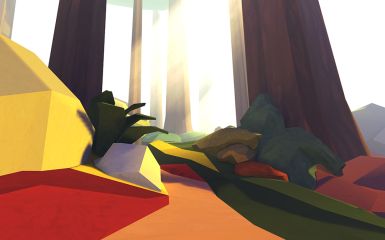
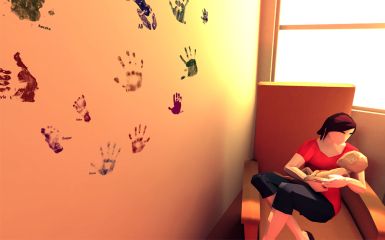
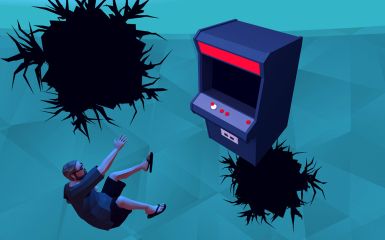
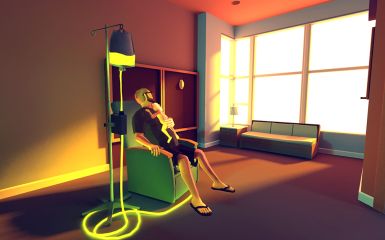
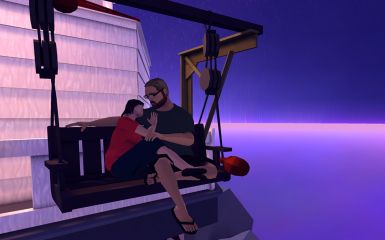
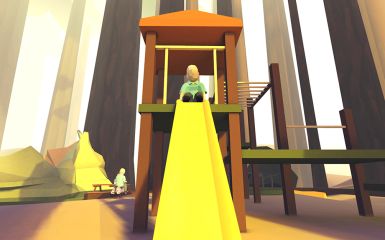
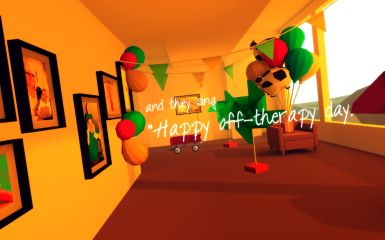
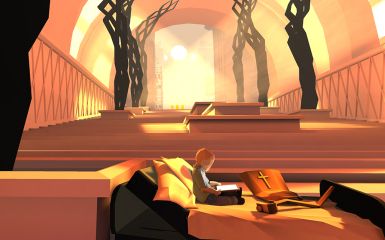
The art direction is one of the strongest reasons to play. It blends dreamlike spaces with grounded domestic imagery, creating an uneasy feeling that matches the subject matter. Some scenes are bright and childlike, while others feel abstract and hollowed out. It does not chase realism, and that choice works beautifully. The visuals often suggest more than they explain, which lets your mind fill in the emotional blanks.
The sound design does just as much heavy lifting. Voices, ambient noise, pacing, and silence are all used with precision. There are moments when the absence of music is more devastating than any score could be. When the game does lean into sound, it usually does so with restraint, letting small cues carry the scene. This is one of those rare releases where the audio does not simply support the mood; it becomes part of the message.
Performance-wise, the experience is intentionally modest in scope, so it does not demand much from your device. If you are looking for something to install quickly and run without fuss, this is not a demanding game in the technical sense. The challenge is emotional, not mechanical, and that may be why it lands so hard.
What it gets right, and what may not work for everyone
The biggest strength of That Dragon, Cancer is its sincerity. It never feels cynical, commercial, or engineered to harvest tears. There is a profound respect in how it treats its source material. You can feel the developers wrestling with how to present unbearable experience without turning it into spectacle.
That said, the game will not click for everyone. Some players prefer clear objectives, visible progression, and a stronger sense of agency. Here, the choices are intentionally limited, and that can be frustrating if you expect conventional interactivity. A few scenes may also feel abstract to the point of distance, especially if you want the game to explain itself more directly. I understand that reaction. Even so, I think the ambiguity serves the project more than it hurts it.
Another thing worth noting is that this is not a game you can really “optimize” with cheats or mods in any meaningful way. The point is not to exploit systems or alter difficulty settings. It is a fixed artistic piece, more like an interactive memoir than a sandbox. Some players may search for mods out of habit, but for this title that impulse misses the point. Likewise, the usual talk around cheats, unlocks, or shortcutting progress simply does not apply here.
Who should play it
If you usually gravitate toward story-rich indies, experimental design, or games that challenge the medium’s assumptions, you should absolutely give this one a chance. If you are looking for a high-action experience to pass the time, you will likely bounce off it. That is not a flaw in the game itself; it is a matter of expectations.
For players who have lived through illness in the family, the game may land with unusual force. It does not offer easy closure, and I respect that. It understands that grief does not resolve neatly. It changes shape. It lingers. It returns in small, unexpected moments. In that sense, the game succeeds because it is brave enough not to pretend otherwise.
As an experienced gamer, I value technical polish, smart systems, and good pacing. But every so often a game arrives that asks to be judged on different terms. That Dragon, Cancer is one of those rare cases. I would not call it a comfortable play, and I would not recommend it casually to someone who wants light entertainment. But as an artistic work, it is one of the most affecting pieces the medium has produced.
Final verdict
That Dragon, Cancer is short, intimate, and devastating in a way that few games even attempt. It is not built for replay value in the traditional sense, but the first playthrough is memorable enough to justify the journey. If you want a thoughtful narrative title that uses the language of games to say something deeply human, this is absolutely worth your time.
It may not offer much in the way of systems to master, and it certainly will not satisfy players hunting for unblocked action, hidden shortcuts, or competitive depth. But as an emotional experience, it is remarkably effective. I came away impressed not because it tried to impress me, but because it stayed honest from beginning to end.
For anyone browsing platforms, looking to download something different, or wondering whether it is free, this is one of those titles that matters more for what it says than how it sells itself. And in a medium crowded with noise, that alone makes it stand out.
How to download That Dragon, Cancer
Availability & Launch: That Dragon, Cancer is available through official digital stores and is typically a paid purchase rather than a free release. To play it, use a legitimate storefront and download it from the platform’s library page. Avoid unofficial sites offering a free install, since they may be unsafe.
Platforms: The game is available on PC and Mac. It is not generally supported on Android, and there is no native console release to install in the usual way. If you want to play on unsupported devices, you would need a cloud or remote setup rather than a direct install.
Install: Buy or claim the game from the official store, then open your library, choose install, and wait for the download to finish. Launch it from the client once setup is complete. There are no special steps beyond standard store installation.
System Requirements: On PC and Mac, the requirements are light by modern standards; a basic dual-core system, integrated graphics, and a few GB of free storage are usually enough. Mobile Android hardware is not an official target, so there is no standard Android spec to list.
Cheats / Mods: Cheats are not part of the intended experience, and mods are not a major feature of this game. It is best enjoyed as released, without alterations.
Unblocked Access: It is not typically an unblocked browser game. If you are in a restricted school or work environment, access may be limited by network rules and store restrictions, so plan to download and play it on a personal device instead.