












Neverending Nightmares review

Neverending Nightmares Review: A Quietly Disturbing Descent into Psychological Horror
Neverending Nightmares is the sort of game that lingers with you after you close it, not because it dazzles with spectacle, but because it knows exactly how to get under your skin. As an experienced gamer, I’ve played plenty of horror games that lean on jump scares and cheap tension. This one takes a different route. It feels intimate, fragile, and deeply personal, as if every corridor is a thought you wish you could avoid. If you want a game that turns dread into a constant companion, this is one of the more memorable indie horror experiences you can download and play.
At a glance, Neverending Nightmares looks simple: monochrome visuals, side-scrolling movement, sparse interaction, and a story that unfolds through repetition. But that simplicity is the point. The game doesn’t waste energy on excess. Instead, it creates an oppressive mood through sound, animation, and a constantly shifting sense of uncertainty. You move through rooms that seem familiar one moment and twisted the next, and that instability becomes the real enemy. It is not a game that wants to reassure you. It wants you to feel trapped in something emotionally real, even when the setting drifts into nightmare logic.
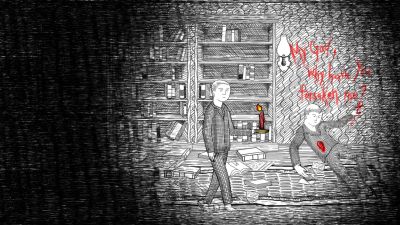
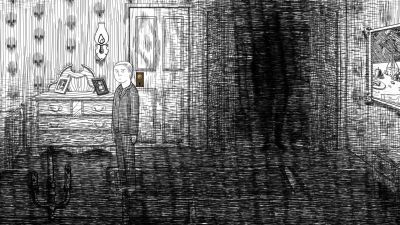
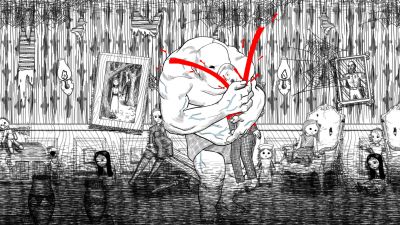
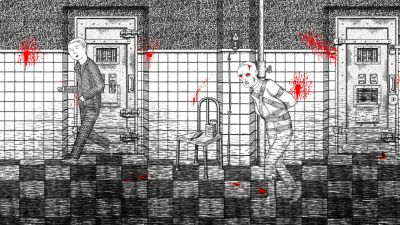
The strongest part of the experience is its direction. The visual style is stark and haunting, using black-and-white art to pull your attention toward shapes, silhouettes, and movement rather than gore or flash. That choice gives the game a timeless look, and it also keeps the focus on mood. Every hallway feels like it has history. Every door feels loaded. The result is a horror atmosphere that stays effective because it is controlled, not overloaded. In a genre crowded with noise, that restraint is refreshing.
A horror game that values tension over spectacle
Neverending Nightmares is built around psychological discomfort. The game understands that fear often comes from anticipation rather than impact. You are rarely overpowered by the mechanics, but you are constantly aware that something is wrong. Rooms repeat with subtle changes, objects appear where they should not be, and the game keeps pushing you to wonder whether you are losing your grip on reality or simply uncovering something terrible.
That ambiguity is one of the reasons the game stands out. It does not explain itself too quickly. It gives you fragments and lets you sit with them. For players who enjoy piecing together a story rather than being handed one cleanly, that works very well. If you prefer action-heavy horror with combat, this will feel slower than what you might expect. But if you value tension, tone, and the kind of unease that creeps in rather than erupts, it delivers.
How it feels to play
The controls are deliberately minimal, which fits the design. You explore, interact, and survive encounters that are more about timing and awareness than complex mechanics. This is not the kind of game that asks for mechanical mastery. It asks for patience and attention. On first playthrough, that simplicity can feel almost sparse, but it also helps the game stay focused on what matters: atmosphere and narrative pressure.
There are occasional moments where the limited interaction can make progression feel a bit rigid, especially if you’re used to more flexible modern horror design. Still, the game’s structure supports its themes. You are not meant to feel powerful. You are meant to feel uncertain, watched, and vulnerable. From a design standpoint, that consistency is impressive.
Another thing worth noting is that the repetition is not lazy. It is part of the concept. Returning to familiar spaces that shift just enough to unsettle you creates a looping sense of psychological strain. Some players may find this draining, but that’s also why it works. The game uses repetition as a narrative and emotional tool, not just a budget-saving trick.
Story, symbolism, and what it leaves unsaid
The story in Neverending Nightmares is personal and distressing, and the game is careful about how it reveals its meaning. It does not hand you a neat explanation early on. Instead, it uses recurring imagery and changing environments to suggest trauma, fear, and instability. That approach makes the experience feel more intimate than a typical horror plot. You are not just following events. You are navigating a mind under pressure.
For players who like deep lore, there is enough here to interpret and discuss, but the game never becomes so abstract that it loses emotional force. Even when the meaning is unclear, the feeling is unmistakable. That balance is hard to pull off. Too much explanation kills the mystery. Too little makes the story feel hollow. Neverending Nightmares stays in the middle ground, and that’s part of its strength.
Because of this, the game rewards a second look. You may notice details on a repeat playthrough that change your understanding of certain scenes. That makes it more than a one-and-done scare machine. It has the kind of design that supports reflection, which is rare in horror games that are otherwise content to shock and move on.
Performance, presentation, and atmosphere
On the technical side, the game is modest, which is exactly what it needs to be. It does not demand high-end hardware, and that makes it easy to install and enjoy on a wide range of systems. The presentation is clean, the animation is effective, and the audio work deserves special praise. Sound is doing a huge amount of heavy lifting here. The creaks, ambient noises, and sudden shifts in tone all contribute to the feeling that the world is unstable.
Visually, the monochrome palette is more than an aesthetic choice. It strips the game down to contrast and silhouette, which means your imagination fills in more of the horror than the screen itself does. That is often more powerful than detailed graphics. There are moments when a more elaborate art style could have weakened the effect. Here, the simplicity is a feature, not a limitation.
If you like horror games you can easily run on older hardware, this is a strong pick. It’s also a title that feels at home on platforms where accessibility and portability matter, especially if you want something compact rather than bloated. As with many indie horror releases, the experience is at its best when you sit down, dim the lights, and let the atmosphere do its work.
Replay value and who will appreciate it
Neverending Nightmares is not built for endless replay in the traditional sense, but it does have value beyond a single run. The short length, atmosphere, and layered storytelling make it the kind of game some players revisit to catch details they missed. That said, the appeal is specific. If you need constant action, branching combat systems, or a sandbox full of systems to tinker with, this will not be your thing.
For horror fans who want something personal, artistic, and quietly disturbing, it lands well. It is also a good fit for players who appreciate games that take a strong thematic identity and commit to it fully. There is very little sense that the developers were trying to please everyone. That focus gives the game integrity. It knows exactly what it wants to be.
As for cheats and mods, they are not really part of the intended experience. This is not the type of game where customization tools or gameplay-altering mods define the community. You can search for them, but the title is primarily enjoyed as designed. Using cheats would undercut the tension anyway, since the unease comes from feeling exposed and uncertain.
Final verdict
Neverending Nightmares is a standout example of psychological horror done with discipline. It doesn’t rely on excess, and it doesn’t try to impress you with scale. Instead, it builds dread through repetition, visual restraint, and a story that feels emotionally charged without spelling everything out. As someone who has played far too many horror titles that mistake noise for fear, I respect how committed this game is to its tone.
It won’t be for everyone. Its pacing is slow, its mechanics are minimal, and its style is more haunting than explosive. But if you want a horror game that leaves the door open for interpretation while still delivering a strong emotional punch, this is worth your time. Whether you plan to free up an evening to play it or simply want a memorable title to download, Neverending Nightmares offers a distinct experience that still stands out among indie horror releases.
How to download Neverending Nightmares
Availability & Launch: Neverending Nightmares is available as a paid indie game rather than a free release. You can download it from official storefronts and trusted digital game platforms, depending on your region.
Platforms: It is available on PC and Mac. It has also been released on mobile platforms in some forms, while unsupported systems may require a cloud streaming service or emulator to access it. Check the store page for current platform availability before you install.
Install: After purchase, open your game library, download the files, and follow the standard setup prompts. On PC or Mac, launch the installer or client entry, then start the game from your library once the install finishes.
System Requirements: For PC and Mac, the game has very light requirements by modern standards. A basic dual-core processor, 2 GB RAM, and integrated graphics are generally enough for smooth play. Android support is limited and device-dependent, so check the store listing before installing.
Cheats / Mods: Cheats are not a core feature, and mods are limited or unofficial. The game is best experienced without altering its tension through external tools.
Unblocked Access: In restricted environments like school or work, access is often blocked by network filters or store restrictions. It is not designed as an unblocked browser game, so availability depends on local policies and whether the platform can be reached.