











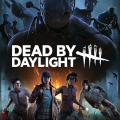
Dead by Daylight review

Dead by Daylight Review: A Relentless Multiplayer Horror Experience
Dead by Daylight has been around long enough to prove it is far more than a passing asymmetrical horror experiment. It is one of those rare multiplayer games that still feels tense even after you understand its systems inside out. Every match tells a different story, and that unpredictability is what keeps me coming back. If you like horror that is less about cheap jump moments and more about pressure, mind games, and survival under constant stress, this game earns its reputation.
What makes Dead by Daylight stand out is its simple setup and deep, messy execution. Four survivors try to escape a supernatural arena while one opposing player hunts them across grim maps filled with generators, hooks, pallets, and enough panic to make your hands sweat. On paper, that sounds straightforward. In practice, it becomes a battle of timing, map knowledge, team coordination, and pure nerve. Even after years of updates, the game still finds ways to keep players second-guessing every move.
A horror game that survives on tension
The biggest strength here is atmosphere. Dead by Daylight understands that fear in multiplayer is not just about what is on the screen. It is about uncertainty. You are always wondering whether the hunter is nearby, whether a teammate is about to make a risky save, or whether your own route through the map is already compromised. That sense of vulnerability gives every chase an edge that many modern horror titles fail to maintain for more than a few hours.
As a longtime gamer, I appreciate that the developer did not flatten the experience into a predictable loop. Instead, the game constantly rewards awareness. Footsteps, scratch marks, generator progress, perk choices, and line-of-sight tricks all matter. New players may feel overwhelmed, but that learning curve is part of the appeal. You do not simply play Dead by Daylight; you gradually learn how to survive it.
Survivor play: teamwork with panic attached
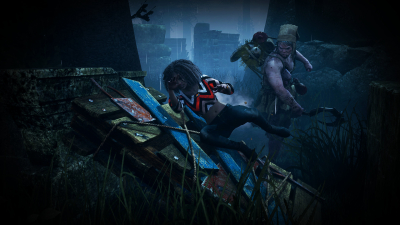
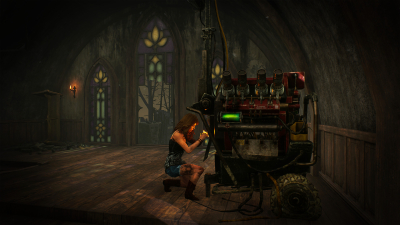
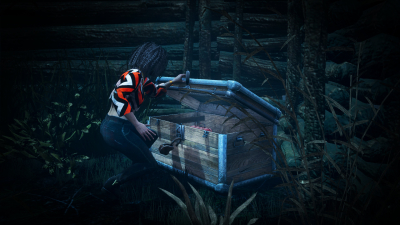
Playing as a survivor is often the more stressful side, and that is not a complaint. Your best moments come from cooperation, but the game rarely lets teamwork feel clean or effortless. Someone has to repair generators, someone else may need to distract the hunter, and when things go wrong, improvisation becomes the main skill. The best matches are the ones where your group adapts on the fly, using perks and map layout to stay alive just long enough to open the exits.
The game’s perk system adds a lot of replay value. You can build for stealth, rescue speed, healing support, or looping routes that waste the opponent’s time. That flexibility keeps every loadout choice meaningful. Even when you fail, you usually learn something useful for the next round. That is a huge reason people continue to download the game years after release and still find reasons to play another session.
Killer play: the power fantasy with a learning curve
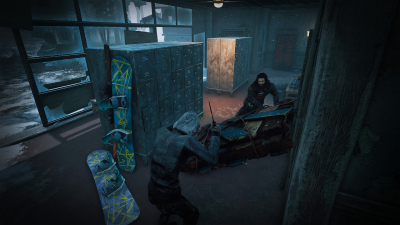
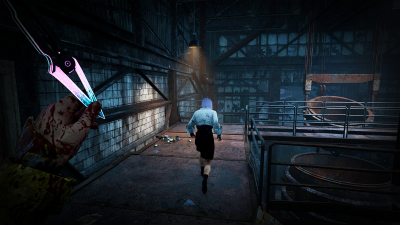
The opposite side is just as compelling, though it asks for a different mindset. Playing the hunter is not just about chasing targets. It is about prediction, pathing, pressure, and choosing when to commit. Different characters dramatically change the feel of a match. Some reward aggressive pursuit, while others thrive on map control or psychological disruption. That variety makes the game more than a standard cat-and-mouse setup.
It is also one of the few multiplayer horror experiences where losing can still feel satisfying if you made smart decisions. A well-timed ambush, a clever route cut-off, or a strategic area denial setup can turn a match around in seconds. That kind of moment is exactly why Dead by Daylight has lasted so long.
Visual style, audio, and the right kind of grime
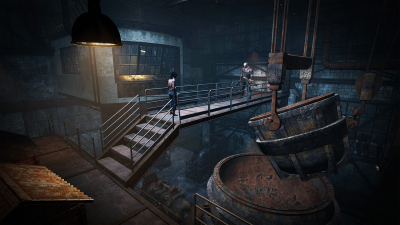
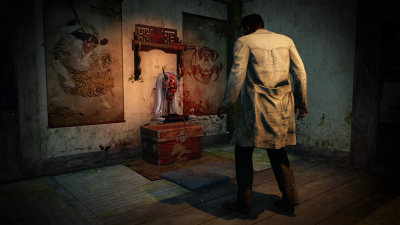
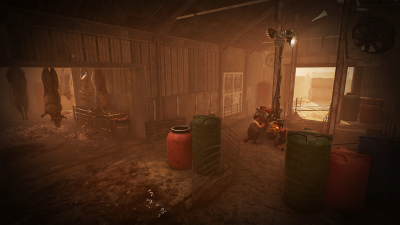
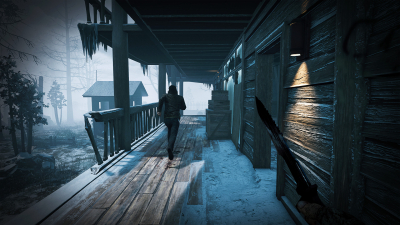
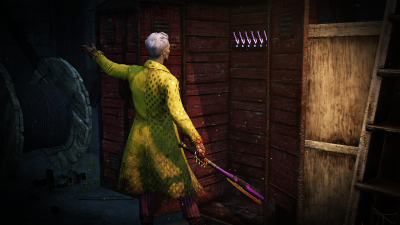
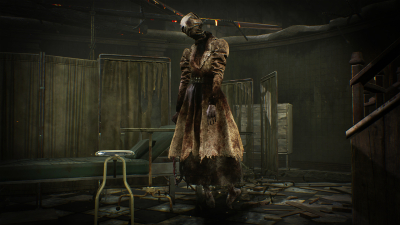
Dead by Daylight is not a pretty game in the traditional sense, and that is a strength. Its art direction leans into dirty, bleak, and sometimes surreal horror imagery. Fog, broken structures, industrial ruins, and nightmare-inspired character design all work together to keep the tone oppressive. It looks like a place nobody should want to be, which is exactly the point.
The sound design is just as important. Audio cues are not decoration here; they are survival tools. A distant heartbeat, a shifting soundtrack, a sudden environmental noise, or the crackle of an approaching ability can change your whole decision in one second. I have played many horror games where sound exists to set mood. Dead by Daylight uses sound to control flow. That is a smarter design choice than it gets credit for.
Modes, content, and long-term value
One of the reasons the game still holds attention is the steady stream of new content. Licensed characters, original additions, map updates, and balance changes keep the ecosystem active. Whether you care about iconic horror crossovers or more original material, there is usually something new to experiment with. That can be a blessing for veterans and a headache for newcomers, because the meta shifts often enough that a guide from a year ago may already feel outdated.
Still, the ongoing support is part of what makes the game worth its place on a premium review page. It is not a stagnant release. It evolves, sometimes elegantly and sometimes awkwardly, but always in a way that keeps the player base talking. If you like games that stay alive through community discussion and repeated balance changes, this one has a lot to offer.
What about cheats, mods, and fair play?
Cheats are not part of the intended experience and should not be used. In a competitive game like this, unfair tools can ruin match integrity fast, especially when one side depends on tension and timing. Mods are a more complicated topic. Cosmetic or community-made tweaks may exist in unofficial spaces, but players should be careful: anything that alters gameplay, gives an unfair edge, or interferes with online play can create account risks. If you want the game at its best, stick with the official version and the supported features.
As for unblocked access, that is not what this game is built for. Dead by Daylight is an online title that depends on proper access to servers and platform services, so it is not something you should expect to run freely in school or work environments. Even if access were technically possible, the game needs time, bandwidth, and focus to be enjoyable.
Performance and platform reach
The game’s availability across platforms is one of its major strengths. It is widely accessible on modern systems, and that helps it keep a large and active audience. Whether you prefer console or PC, the experience remains recognizable, though input feel and performance can vary depending on your hardware. PC remains the most flexible option for settings, controls, and community support, while console versions offer easy access for players who simply want to install and play without much setup.
On handheld or mobile-adjacent expectations, it is worth being direct: there is no true native mobile equivalent that captures the full experience in the same way, and playing through unsupported methods would not be a substitute for the real thing. If you want the proper game, use the official platforms and official download paths.
Final verdict
Dead by Daylight remains a standout multiplayer horror game because it understands that fear works best when it is shared, imperfect, and always one step away from total collapse. The asymmetrical design gives both sides a real identity, the atmosphere is consistently effective, and the continuous updates keep the game feeling alive even when the community meta gets messy. It is not always balanced, and it can be frustrating when queues, perks, or matchmaking create uneven sessions, but those rough edges are part of what gives it personality.
If you want a horror title that you can download, install, and keep returning to long after the initial novelty wears off, this is still one of the strongest options out there. It rewards patience, map knowledge, and composure under pressure. In other words, it rewards players who can stay calm when the match stops being friendly. That is exactly the kind of experience I respect in a game built around survival.
How to download Dead by Daylight
Availability & Launch: Dead by Daylight is available through official digital storefronts and is not a free game in the usual sense, though it may be included in promotions or subscription libraries at times. To download it safely, use the platform’s official store page and avoid unofficial installers.
Platforms: It is available on PC, PlayStation, Xbox, Nintendo Switch, and other supported console platforms depending on current storefront availability. It is not natively available on Mac or Android in a standard official version, so those users would need cloud access or another supported device rather than a direct install.
Install: Purchase or claim the game, download it from the official store or launcher, then follow the on-screen install prompts. After installation, launch the game, sign in, and let any updates finish before you play.
System Requirements: On PC, a 64-bit OS, a modern multi-core CPU, 8 GB RAM, and a dedicated GPU are the practical baseline. Mac and Android do not have standard native support, so there are no official local minimum specs to rely on for a normal install.
Cheats / Mods: Cheats are not allowed and can lead to penalties. Mods are generally not recommended for online play unless they are cosmetic, offline-safe, and clearly permitted by the community and platform rules.
Unblocked Access: The game is not suited for unblocked play in school or work settings. It requires proper network access, compatible hardware, and a full session to enjoy correctly.