












Predecessor review

Predecessor Review: Tactical Team Fights in a Sharpened Free-to-Play MOBA
Predecessor Review: a return to lane pressure and team tension
Predecessor arrives with a very specific promise: bring the old-school lane battle energy of a classic third-person MOBA into a modern, sharper package. It does that with confidence. If you have spent years bouncing between action MOBAs and hero shooters, this one will feel familiar in some places and refreshingly exacting in others. It is not a game that hands out success for free, and that is exactly why it has such appeal. To play well, you need timing, map awareness, and a willingness to learn how every mistake ripples across a match.
What struck me first was how grounded the combat feels. The camera angle, movement, and ability cadence all push you to stay present. You are not just farming minions and waiting for a late-game payoff; you are continuously reading spacing, cooldowns, positioning, and the next objective call. Predecessor is built for players who enjoy pressure. It has that “one more match” energy, but also enough mechanical depth to reward long-term commitment.
A familiar formula, rebuilt with more bite
Predecessor inherits the lane structure, jungle routes, and objective control that veterans will recognize immediately, yet it does not feel like a simple imitation. The game’s third-person perspective gives fights a more personal edge. When a skirmish starts, you feel the terrain, sightlines, and pursuit in a way that top-down MOBAs cannot quite match. Chasing someone around a corner or turning a fight with a narrow dodge feels satisfying because your decisions happen in real space, not just on a minimap.
The roster is varied enough to support different moods and roles, whether you want to dominate close-range engagements, support your team from behind the line, or farm safely until you become the threat nobody wants to face. That said, balance is always going to be a moving target in a game like this. Some heroes feel more forgiving than others, and some matchups can be rough before you fully understand the counters. For me, that is part of the charm. It keeps the game from becoming predictable, and it gives room for experimentation with builds, loadouts, and team compositions.
Combat that rewards discipline more than flash
I appreciate that Predecessor does not confuse spectacle with depth. Abilities matter, but they work best when paired with solid fundamentals. If you overextend, wander without backup, or misread an objective setup, the map will punish you fast. Yet when you and your team coordinate properly, the game can feel electric. There is a lot of satisfaction in timing an initiation, landing a key ability, and watching a team fight swing because someone understood when to engage and when to back off.
The action also feels readable. Too many modern multiplayer games bury clarity under effects, noise, and aggressive visual design. Here, I could usually tell what was happening, why it was happening, and what I should do next. That is not a small thing. Clarity makes a competitive game better, especially one that asks players to grow from match to match. If you want to improve, you can learn from your losses instead of just feeling lost.
Maps, pacing, and the rhythm of a match
One of the strongest parts of Predecessor is its pace. It does not rush every moment, but it never feels idle either. Early game lane pressure matters, mid-game rotations matter, and late-game decisions become brutally important. The match flow creates tension in layers. You might have a calm opening, then suddenly a contested objective drags everyone into the same lane and the whole game tilts on a single rotation. That sort of momentum is what keeps a good MOBA alive.
The map design supports this rhythm well enough, though it takes time to learn the safest routes and the best windows to push. New players may feel exposed at first, especially if they try to play aggressively without map knowledge. Still, that learning curve gives the game personality. Predecessor does not want to be something you master in a weekend. It wants to be a game you return to, test yourself in, and slowly understand in layers.
Presentation: clean, functional, and more polished than expected
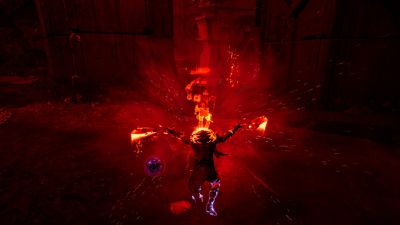
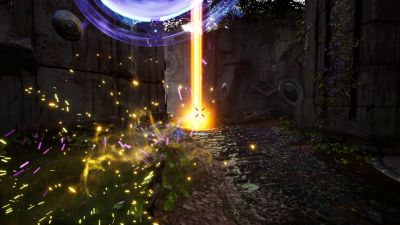
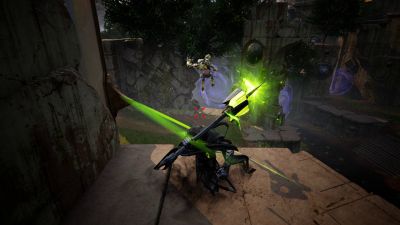
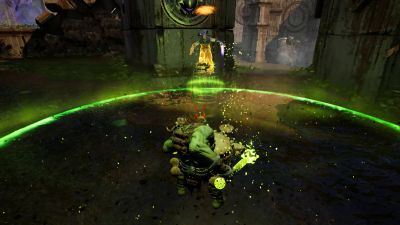
Visually, Predecessor leans toward clean readability rather than wild art excess. Character silhouettes stand out well enough, and the environments do a solid job of supporting competitive play without becoming visually noisy. It is not the kind of game that wins you over through cinematic art direction alone, but it does enough to feel cohesive and serious about its identity. The interface is similarly practical, which I value. A multiplayer game lives or dies by how quickly you can process information, and this one mostly respects your attention.
Audio is equally functional, with ability cues and combat sounds doing the work they should do. The soundtrack and effects are there to reinforce tension rather than dominate it. That may sound understated, but understated design often ages better. A game like this needs consistency more than novelty every few seconds.
Progression, unlocks, and the free-to-play reality
Since Predecessor is free, expectations around progression matter. The game needs to feel fair without becoming sterile, and for the most part it gets this balance right. There is enough structure in unlocks and account growth to make each session feel like part of a larger journey, but it does not bury gameplay behind overly punishing gates. For a player who wants to download something competitive and jump in without a heavy upfront cost, that is a real advantage.
Of course, every free multiplayer game runs into the same debate: how much is optional, and how much feels like pressure? Predecessor keeps things reasonably in check, but anyone considering the long haul should look carefully at the surrounding economy, especially if they intend to invest many hours. The good news is that the core experience is not locked away behind paywalls, and the act of installing and getting into matches is straightforward on supported platforms.
What about cheats, mods, and community expectations?
Like most competitive online games, Predecessor is not the kind of title where cheats belong anywhere near the discussion. Anything that undermines fair play will damage the experience for everyone else, so that is not something I can endorse. Mods are a more nuanced topic. In a game built around online competition, the room for meaningful mod support is usually limited, and players should assume unofficial changes are restricted unless the developer clearly says otherwise.
That may disappoint the tinkerers, but it is consistent with the genre. If you are here to test strategy, improve mechanically, and climb through honest play, Predecessor gives you a proper arena for that. If you are after experimental side content or a heavily customized sandbox, this is probably not the right fit.
Unblocked access and the practical side of playing
As for unblocked access, this is the sort of game that depends heavily on your network and device permissions. At home, getting in is simple enough. In school or work environments, expect restrictions unless the network specifically allows gaming traffic and the launcher or platform is not filtered. I would not count on unblocked play in controlled environments, and that is true for most live-service competitive games of this type. If you want to be safe, plan to play on a personal network where installation, updates, and online access are not getting in each other’s way.
Final verdict
Predecessor is a confident return to form for players who miss slower-burn strategic competition wrapped in real-time action. It rewards study, discipline, and team coordination more than raw spur-of-the-moment chaos, but it still offers that rush when a smart decision turns the whole match. I respect how committed it is to its identity. It does not feel like a game trying to please everyone. It feels like one trying to be good at exactly what it is.
If you want a free multiplayer game to install, learn, and improve in over time, Predecessor is worth your attention. It is not effortless, and it will not flatter sloppy play, but it offers a strong competitive core that can easily keep experienced players engaged. For me, that makes it one of the more interesting genre picks to download and seriously play right now.
How to download Predecessor
Availability & Launch: Predecessor is available as a free download on its supported store pages and live service platforms. Check the official listing for current availability and regional access before you install.
Platforms: The game is available on PC and is designed for online play on supported platforms. Console support may vary by region or update cycle, so confirm the current store listing before you download. It is not a cloud-only title on PC, and it does not need an emulator on supported systems.
Install: Download the client from the official store, sign in, and follow the installer prompts. After it finishes, let the game update fully before you play.
System Requirements: On PC, expect at least a modern 64-bit Windows system, a capable mid-range CPU, 8 GB RAM or more, and a DirectX-compatible graphics card. Mac and Android are not standard native targets, so check official support before attempting any install.
Cheats / Mods: Cheats are not acceptable in online play, and unofficial mods are generally limited or unsupported unless the developer states otherwise.
Unblocked Access: Predecessor is unlikely to be unblocked on restricted school or work networks. Use a personal network if you want reliable access and updates.