












Brick Breaker review

Brick Breaker Review: A Timeless Arcade Classic That Still Hooks You
Brick Breaker is one of those classics that reminds me why simple game design can age better than a lot of bloated modern releases. You do not need a huge story, an open world, or a wall of tutorials to get hooked here. You need reflexes, timing, a little patience, and the kind of focus that makes five minutes turn into an hour. As an experienced gamer, I appreciate how Brick Breaker strips everything down to the essentials and still manages to feel tense, satisfying, and strangely hard to put down.
Fast to learn, harder to master
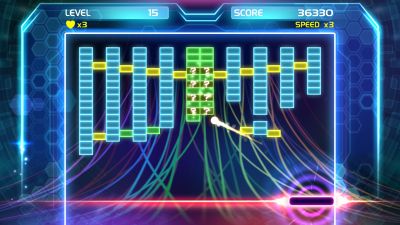
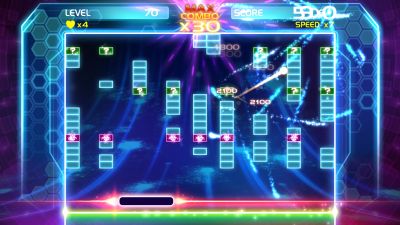
The core loop is instantly familiar: guide the paddle, send the ball upward, and clear the bricks before the screen gets crowded with trouble. That sounds basic because it is, but the best arcade games often live in that space between obvious and addictive. Brick Breaker nails the rhythm of anticipation and reaction. Every launch matters. Every bounce has personality. A slight angle change can turn a safe run into a chain reaction that clears half the stage, and that is where the game really shines.
What keeps Brick Breaker interesting is how it turns a minimal rule set into a constant problem-solving exercise. Do you chase the power-up and risk losing your line? Do you play safe and slowly chip away at the wall? Do you try to funnel the ball into tight corners and let it do the heavy lifting? These tiny decisions make the game feel more tactical than it first appears. I have played a lot of arcade-style titles over the years, and this one understands the value of immediate feedback better than most.
The feeling of control is the real hook
A good brick breaker lives or dies by the paddle response, and this is where the experience matters most. If the controls feel mushy, the whole game falls apart. When the paddle is tight and responsive, though, every save feels earned. Brick Breaker benefits enormously from that direct connection between input and on-screen movement. You are never fighting the controls; you are fighting the layout, the angles, and your own mistakes.
That sense of control makes the game surprisingly re-playable. You can always tell when a round’s failure came from a bad decision instead of bad design, and that honesty is refreshing. The game is fair in the old-school sense: it challenges you without pretending to be something it is not. If you enjoy arcade games that reward practice, this is exactly the kind of title that invites one more run, then another, then another.
Power-ups, pacing, and just enough chaos
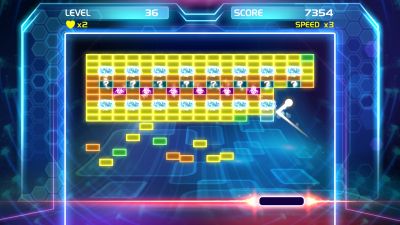
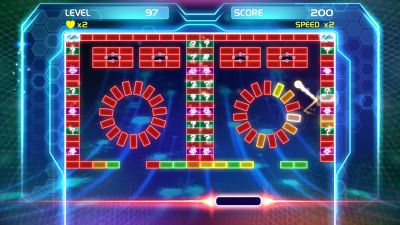
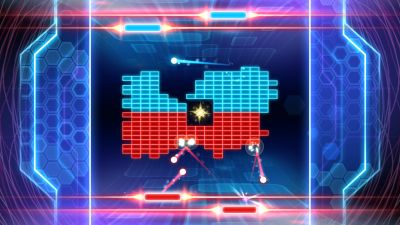
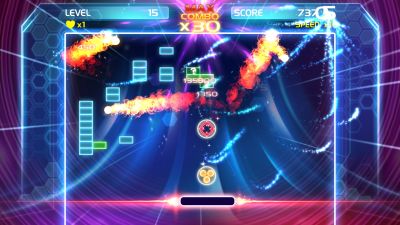
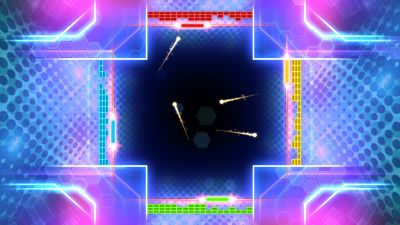
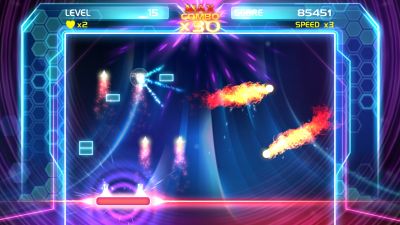
Part of the charm of Brick Breaker is how it sprinkles in power-ups without drowning the whole experience in gimmicks. Extra balls, wider paddles, speed changes, and similar bonuses can dramatically shift the pace of a round. I like that the game does not rely on constant spectacle to stay interesting. Instead, it uses small bursts of chaos to keep the action unpredictable. A lucky drop can change everything, and that little edge of randomness keeps each session feeling fresh.
At the same time, the game never loses its identity. Even with power-ups flying around, the heart of the experience remains precision arcade play. That balance matters. Too many modern mobile and browser games pile on effects and call it depth, but Brick Breaker knows better. It keeps the screen easy to read, which is a huge part of why it remains enjoyable for long stretches.
Visuals and sound do the job without overreaching
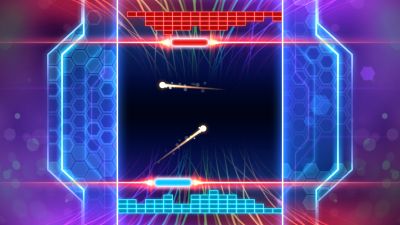
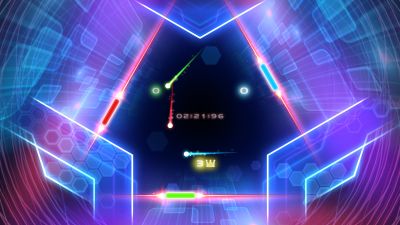
This is not a game trying to impress you with cinematic graphics, and honestly, that works in its favor. The presentation is clean, readable, and focused on function. Bricks need to stand out. The ball needs to be easy to track. The paddle needs to feel grounded in the playfield. Brick Breaker understands that visual clarity is not a downgrade; it is a design choice. You know exactly what is happening at a glance, which is vital in a game where split-second reactions decide everything.
The sound design usually follows the same philosophy. Hits, bounces, pickups, and round transitions tend to be snappy and useful rather than overwhelming. There is a satisfying mechanical rhythm to the whole thing, and that rhythm becomes part of the appeal. It is the kind of audio feedback that keeps your brain engaged without demanding your attention away from the action. For a game built around repetition, that consistency is a strength.
Why it still works in 2026
Some older-style games age poorly because they were only ever propped up by novelty. Brick Breaker does not have that problem. It survives because the design loop is fundamentally strong. The appeal is universal: clear blocks, keep the ball alive, chase high scores, and improve through repetition. That loop works on a commute, during a short break, or as a late-night “one more round” session when you should probably be doing something else.
There is also a kind of meditative quality to it. When the game is clicking, you enter a flow state that many bigger titles can only dream of. You are not absorbed by lore, quests, or menus; you are locked into timing and momentum. That makes Brick Breaker ideal for players who want something quick, focused, and rewarding without spending twenty minutes learning systems first.
Who will like it most?
If you grew up on arcade cabinets, browser games, or early mobile titles, Brick Breaker will feel like home. If you are new to the genre, it is still an easy recommendation because the learning curve is gentle and the challenge grows naturally. It is also a great fit for players who like chasing scores and comparing personal bests. The game is less about finishing than improving, and that mentality gives it a lot of longevity.
It may not be the best choice if you need deep progression systems, long narrative arcs, or heavy customization. But for pure arcade satisfaction, it is hard to argue with the formula. The best praise I can give Brick Breaker is that it remembers what the genre is supposed to do: get you playing immediately and keep you engaged by making every bounce matter.
My verdict
Brick Breaker is a lean, timeless arcade game that still knows how to grab attention with nothing more than a ball, a paddle, and a screen full of targets. It is easy to play, difficult to master, and built around the kind of uncluttered design that more games should study. Whether you want a quick free session or a longer score-chasing marathon, it delivers exactly what the name promises.
For me, that is the mark of a good classic: no wasted motion, no fake complexity, just clean, satisfying gameplay. If you are looking to download a game that works across short breaks and long play sessions alike, Brick Breaker is still worth the install. It may look simple, but that simplicity is the point. And in the world of arcade games, that point matters a lot.
How to download Brick Breaker
Availability & Launch: Brick Breaker is typically available as a free game on browser portals, mobile stores, and sometimes through standalone PC builds. In many cases you can play it instantly online, or download it from the official listing if a native version is offered.
Platforms: It is commonly found on Windows, Android, iOS, and browser-based platforms. If you see a version listed for Mac, confirm whether it is a direct release or a cloud/emulator option. Unsupported systems usually need browser play, cloud access, or an emulator to run smoothly.
Install: To install, open the official store or site, choose the game page, then download and follow the on-screen prompt. On mobile, tap install from the app store. On PC, run the installer if provided, then launch the game from your desktop or library.
System Requirements: For PC or Mac, minimum requirements are usually modest: a basic dual-core processor, 2 GB RAM, and integrated graphics. On Android, a recent device with enough storage and a current OS version is generally sufficient. Browser versions need a stable internet connection.
Cheats / Mods: Cheats and mods are usually limited or unsupported in official versions, especially for browser and mobile builds. Community mods may exist for some PC releases, but use them carefully and only from trusted sources.
Unblocked Access: Yes, many versions can be played unblocked in school or work environments through browser sites, depending on network rules. If one site is restricted, another mirror or the official web version may work, but access always depends on local filters.