












Assassin’s Creed® III review

Assassin’s Creed III: Ambition, Conflict, and the Wild Frontier
Assassin’s Creed III Review
Assassin’s Creed III is one of those games that divides the room long before the credits roll, and I mean that in the best possible way. If you came here expecting another polished urban parkour playground, this entry takes a hard left into the mud, smoke, snow, and politics of the American Revolution. Nearly every system feels like Ubisoft trying to stretch the series into a bigger, rougher, more ambitious shape. The result is not always graceful, but it is rarely dull. Even now, years later, it still has a distinct identity that makes it worth a fresh play if you enjoy historical action with a little chaos in the seams.
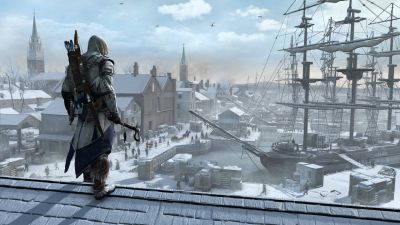
What stands out first is the setting. The colonial frontier, Boston, New York, and the wilderness between them give the game a texture the earlier entries never quite had. There is less rooftop-to-rooftop elegance in some areas, but in exchange you get forests, rivers, fortresses, and snowy settlements that make the world feel harsher and more grounded. I remember the first time I simply wandered off the path to hunt, scout, and climb through the trees. It felt like the series was finally learning that a historical setting can be more than a backdrop; it can shape how you move, fight, and think.
A different kind of Assassin
Connor is not the smoothest protagonist in the franchise, and that is part of why he works. He carries the weight of a very specific conflict, one that is personal long before it becomes political. He is less charming than Ezio and less openly witty than some later leads, but he is steady, serious, and shaped by loss in a way that fits the story. I won’t pretend every scene lands perfectly, because the writing sometimes overreaches and the pacing can be uneven, yet Connor’s blunt force approach gives the game a tone all its own. He is not built to entertain the crowd; he is built to endure it.
The supporting cast helps lift the campaign when it needs momentum. Haytham is a standout presence, and the early structure around him gives the game one of its smartest surprises. That opening is still one of the best decisions the series ever made, because it lets you understand the conflict from a different direction before settling into Connor’s journey. It adds tension, and it makes the later confrontation feel more layered than a simple good-versus-evil setup.
Combat, stealth, and the messy joy of movement
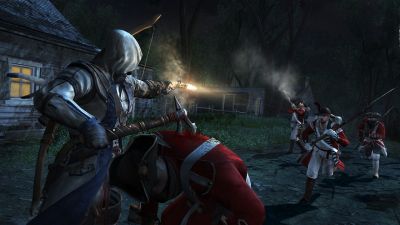
Mechanically, Assassin’s Creed III is a strange blend of refinement and rough edges. The combat is more aggressive than in earlier titles, with quicker counters and more crowd-control tools, but it can also become too easy once you get the rhythm. When it clicks, there is a satisfying flow to chaining attacks, dodges, and finishers. The game wants you to feel like a predator moving through a battlefield rather than a careful duelist, and that attitude suits the setting.
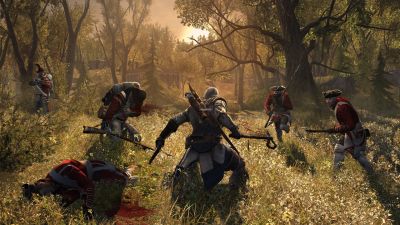
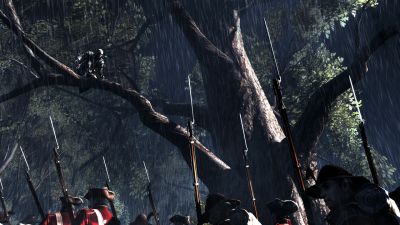
Stealth remains a major part of the experience, though it is not always the series’ strongest showing. Bushes, tree cover, rooftops, and frontier terrain all offer opportunities to stay hidden, but the AI can be inconsistent. Sometimes enemies feel sharp and reactive; other times they pass by like they are auditioning for a different game. Still, there is pleasure in stalking a camp from the treeline, making one clean move, and slipping away before the alarm spreads. For players who like to experiment, there are plenty of ways to replay missions with different approaches, and that flexibility is one reason fans still look for cheats and mods to customize the experience on PC.
Traversal is where the game’s ambition is most visible. The newer climbing and movement systems make it easier to move through dense natural spaces, and the frontier sections give Connor room to express that agility. Tree-running is a great idea, even when the camera sometimes makes it awkward. Sailing also enters the picture, and while naval combat is not the whole game, it becomes one of its most rewarding additions. The first time you manage a sea battle properly, you can feel the series testing a future it would later fully embrace.
World design that still has character
The open world is not just large; it is varied in a way that supports discovery. The frontier is the star, with long stretches of forest and rocky terrain that encourage slow observation instead of rushing from icon to icon. Towns feel busier and more structured, while the wild areas give a welcome sense of scale. I like that the game doesn’t always hand you a clean path. Sometimes getting from one objective to another means dealing with weather, terrain, guards, or wildlife. It is a little messy, but that mess is what gives the world personality.
There is also a stronger sense of environmental storytelling here than many players remember. Homesteads, side tasks, and regional details quietly build a society in motion. Not every side activity is a winner, of course. Some optional content feels like busywork, and a few mission types are more useful for completionists than for people seeking pure excitement. Even so, the world rewards lingering. If you simply want to run through the main story and download the next thing on your queue, you can do that. But if you stop to live in the game for a while, you get more out of it than its reputation suggests.
Technical performance and the platform question
Assassin’s Creed III has appeared on multiple platforms over the years, and that matters because the experience can vary depending on where you play. On modern consoles and PC, the game is much easier to access, and for many players that means a straightforward install and launch without much fuss. On older hardware, performance and visual clarity may feel more dated, which is understandable given the game’s age. PC remains the best place for players who want flexibility with settings, replay options, and community-made tweaks, including mods. Console versions are simpler to pick up and play, but they naturally offer less room for customization.
If you are wondering whether you can get it for free, the honest answer is that the full game is generally a paid title, though store promotions or subscription services may make it available temporarily without an extra purchase. Searching for a free option is common with older games, but official access is still the cleanest route. I would also avoid promising any “unblocked” version for school or work environments, since that depends on local network rules rather than the game itself. In restricted spaces, access is often limited no matter what you try to play.
How it holds up today
What surprised me most on a recent return was how much of Assassin’s Creed III still feels bold. Some systems are clunky by modern standards, and some mission design feels overly scripted, but the game is not timid. It tries a lot: a new hero, a darker tone, a different world structure, naval combat, homestead management, and a story that reaches across personal and national conflict. Not every idea lands with equal force, yet the ambition alone makes the game interesting to revisit.
It is also worth saying that this is not the most approachable entry if you are new to the series. The controls and mission structure can feel a little stiff compared with later entries, and the game expects patience from the player. That said, experienced action fans will likely appreciate its willingness to be rough around the edges rather than dissolve into something generic. I would rather play a game that has opinions than one that is merely efficient.
For people who enjoy historical settings, tactical movement, and a bit of cinematic drama, Assassin’s Creed III remains easy to recommend with a few caveats. If you want cleaner stealth, smoother controls, or more modern polish, you may notice the age quickly. But if you value atmosphere, a memorable setting, and a franchise entry that actually risks being different, this one still has teeth.
In the end, Assassin’s Creed III is not the series at its most elegant, but it might be one of its most interesting. It is a game about conflict in every sense: nations, ideologies, families, and the player’s own expectations of what an Assassin’s Creed game should be. That makes it imperfect, sometimes frustrating, and often fascinating. And for me, that is enough to make it worth another play.
How to download Assassin’s Creed III
Availability & Launch: Assassin’s Creed III is available through major digital stores and retail editions on supported platforms. It is not generally free, though discounts and subscription programs sometimes make it easier to access.
Platforms: It is available on PC, PlayStation systems, Xbox systems, Nintendo platforms in certain versions, and some legacy releases on older hardware. If you want to download and play it on PC, no cloud service is usually needed. Unsupported or older devices may require an emulator or a remaster-compatible version, depending on the release.
Install: Buy or redeem the game from your store of choice, download the installer or game files, then run the setup and follow the on-screen prompts. On consoles, install from your library and launch once the download finishes.
System Requirements: On PC, a modest modern setup is usually enough for the remastered release, while original versions run on older hardware. Mac and Android are not standard native targets for the main release, so unofficial methods, cloud play, or alternative devices may be required.
Cheats / Mods: Cheats are not officially supported in normal play, while mods are mainly a PC feature and depend on the version you install. Use community tools carefully and only from trusted sources.
Unblocked Access: It is generally not suited for school or work networks, and access may be restricted by firewalls or admin settings. If you want to play in a locked-down environment, you will likely need approved access rather than a simple download.